
A Taxing Weekend
/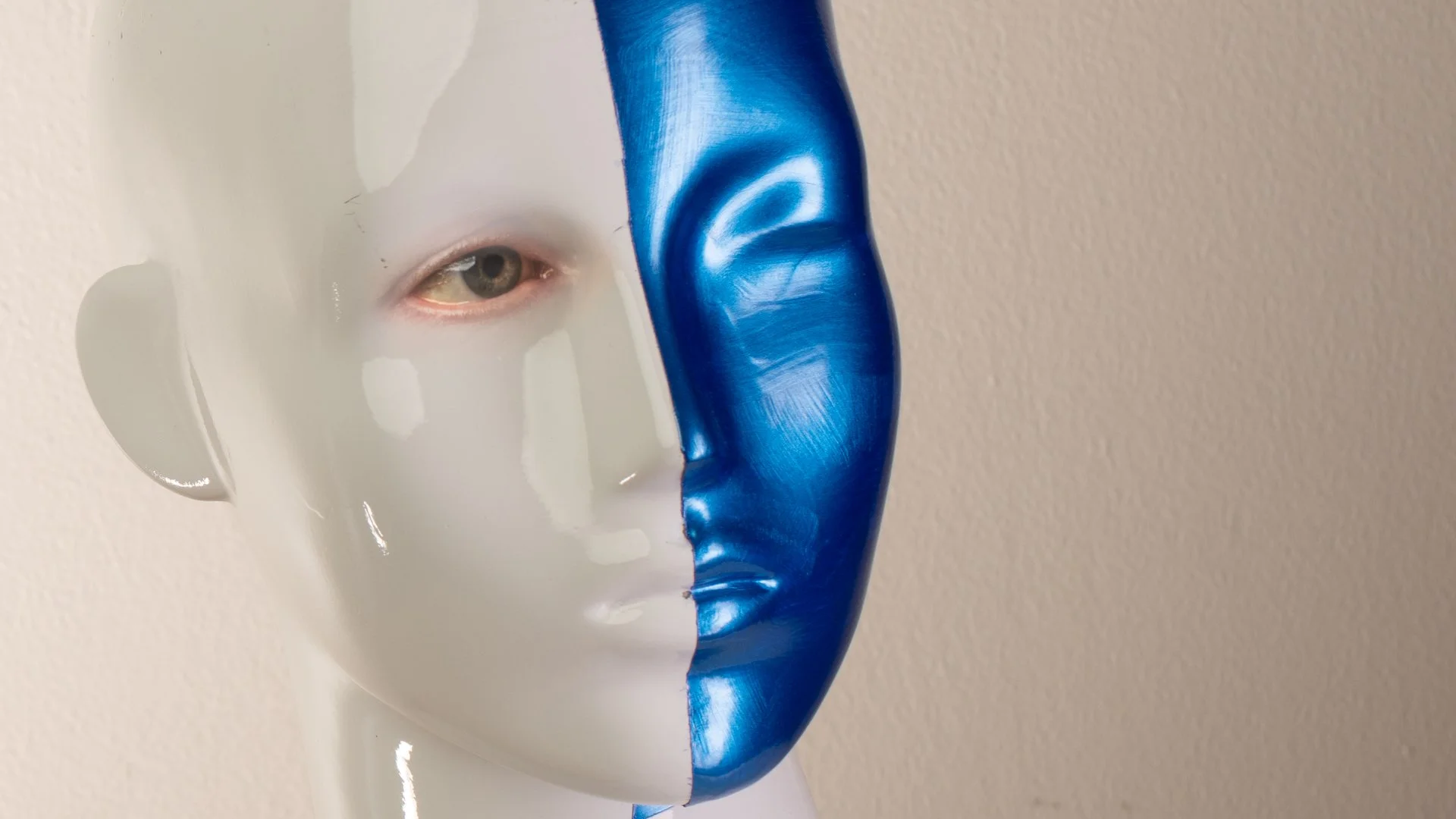
One of my first attempts - the eye is my own.
Coming Attractions
Hard to believe we are already into the third week of March. Even harder to believe we got a foot of snow overnight - two days after the temperature hit the mid-sixties, over the weekend. Don’t get me wrong, I love having four distinct seasons, but I do wish we had them less frequently than every two weeks.
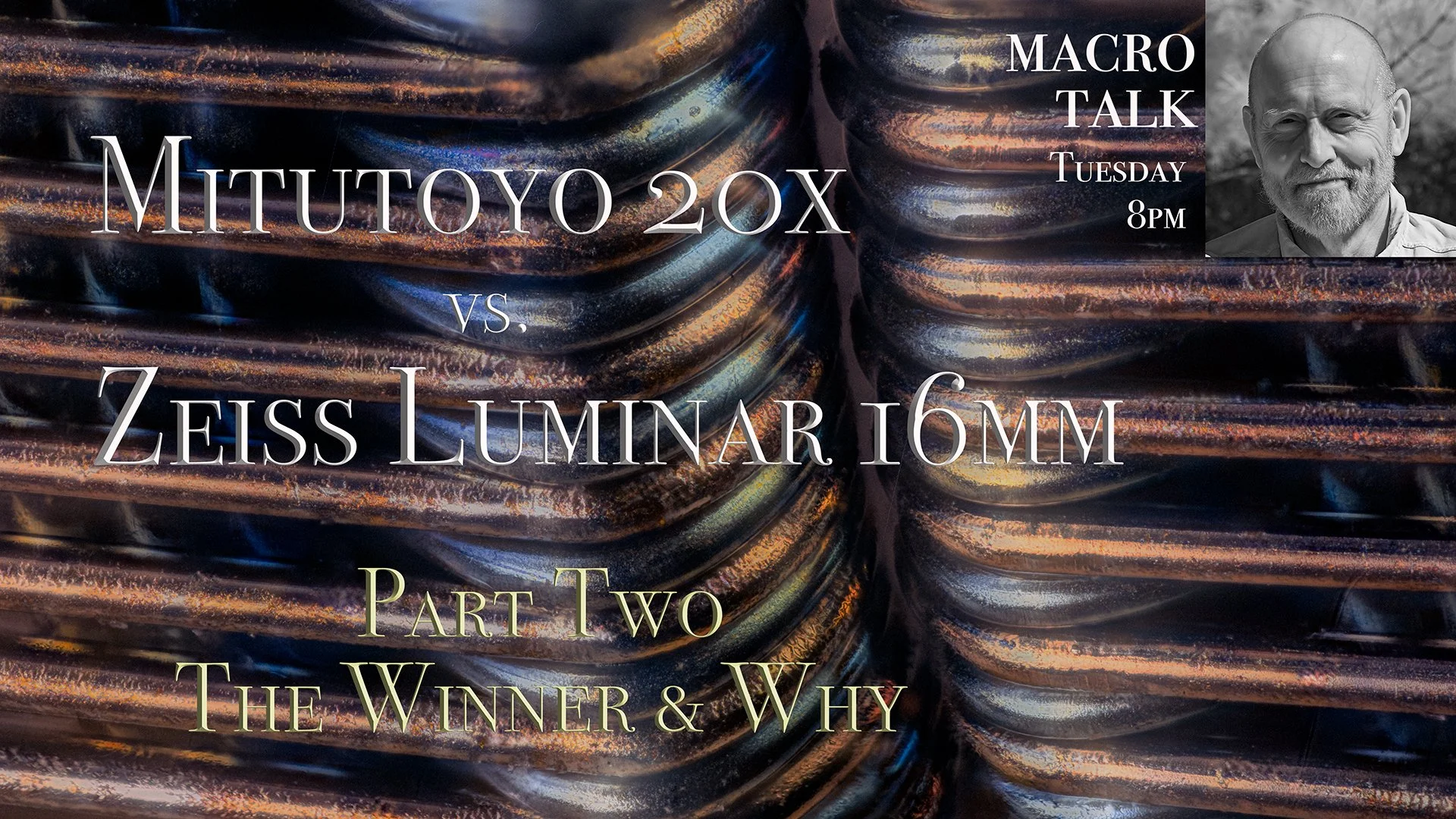
This week will kick off with a little cleanup from last week. Last Thursday we compared the performance of two classic high-magnification lenses, the Mitutoyo M Plan APO 20X NA 0.42 infinity conjugate microscope objective and the Zeiss Luminar 16mm (at 20X) bellows lens. One hour of Livestream was not enough time for me to collect the final images so the week ended without a definitive answer to the question - which would be my first choice for 20X macro imaging? This Tuesday I will gather all the loose ends and we will look at the images and draw some conclusions about these lenses. Also, on Thursday, I had to really rush through some very important information about the Modulation Transfer Function and did not get to discuss a few other important concepts that will help bring this comparison to a satisfying conclusion. Join me this Tuesday at 8PM for Macro Talk - here is your link to the stream - https://youtube.com/live/Lp_6lUVPdgo?feature=share
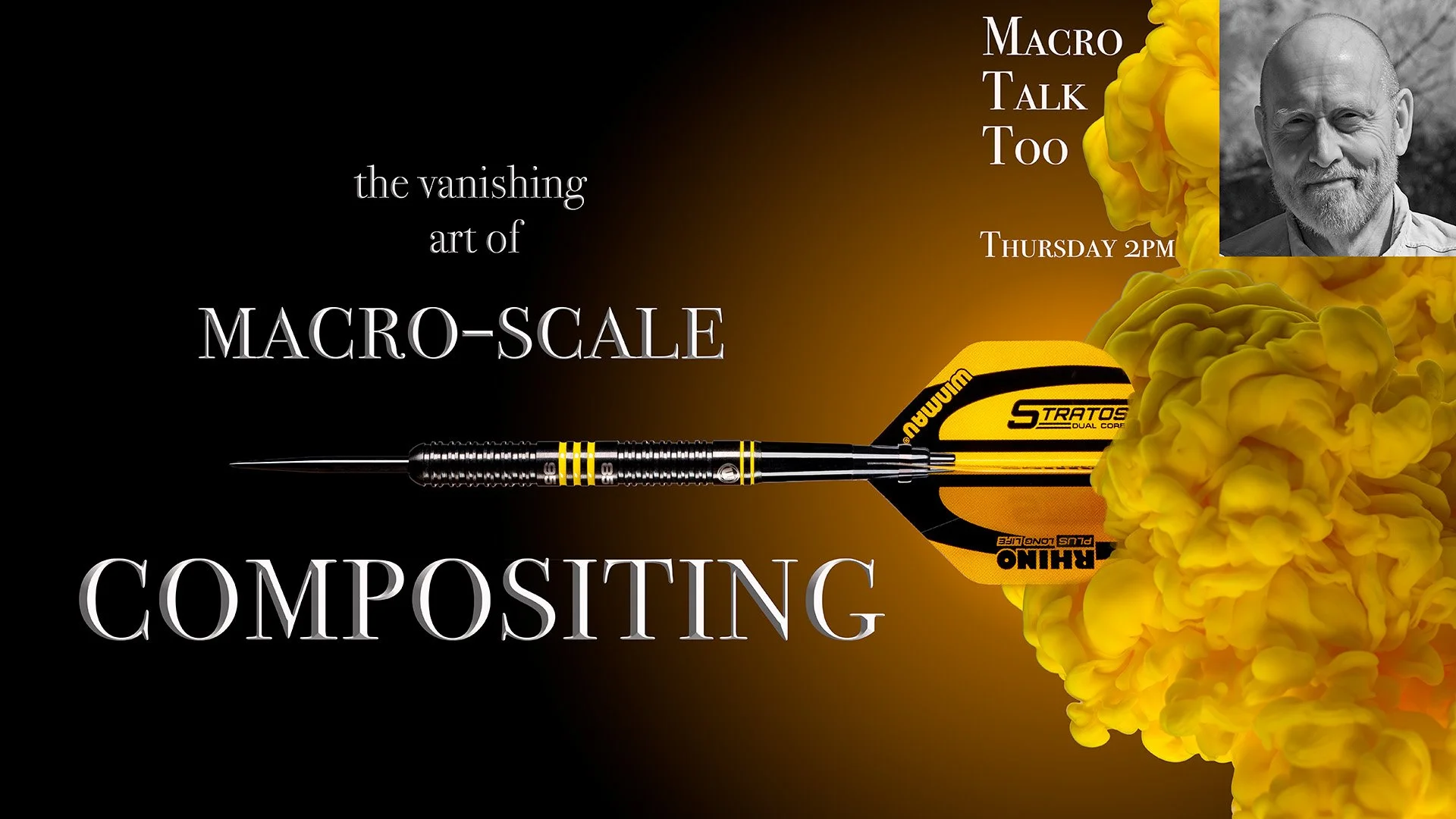
On Thursday, in Macro Talk Too, we are going to shift focus from the technical minutia of high-magnification lens selection onto the pure pleasure of creative compositing! My decision to cover this topic was a result of spending so much time studying the impact of the new tools of computational photography that seem to be popping into existence on a daily basis. It struck me that the emergence of all these AI shortcuts is very probably going to render traditional compositing techniques obsolete. Which is a great shame, in my opinion, as these post-processing projects can be enormously enjoyable, while also teaching us many useful skills. I thought it would make for an interesting discussion and give us all an opportunity to flex our creative muscles, before compositing is consigned to the darkroom of photographic history. I will demonstrate and discuss the commonly deployed tools and techniques, while sharing a few of my own efforts. Macro Talk Too starts at 2pm, every Thursday (Central Time) and you can get to it by following this link - https://youtube.com/live/LbvqQSV4NjA?feature=share
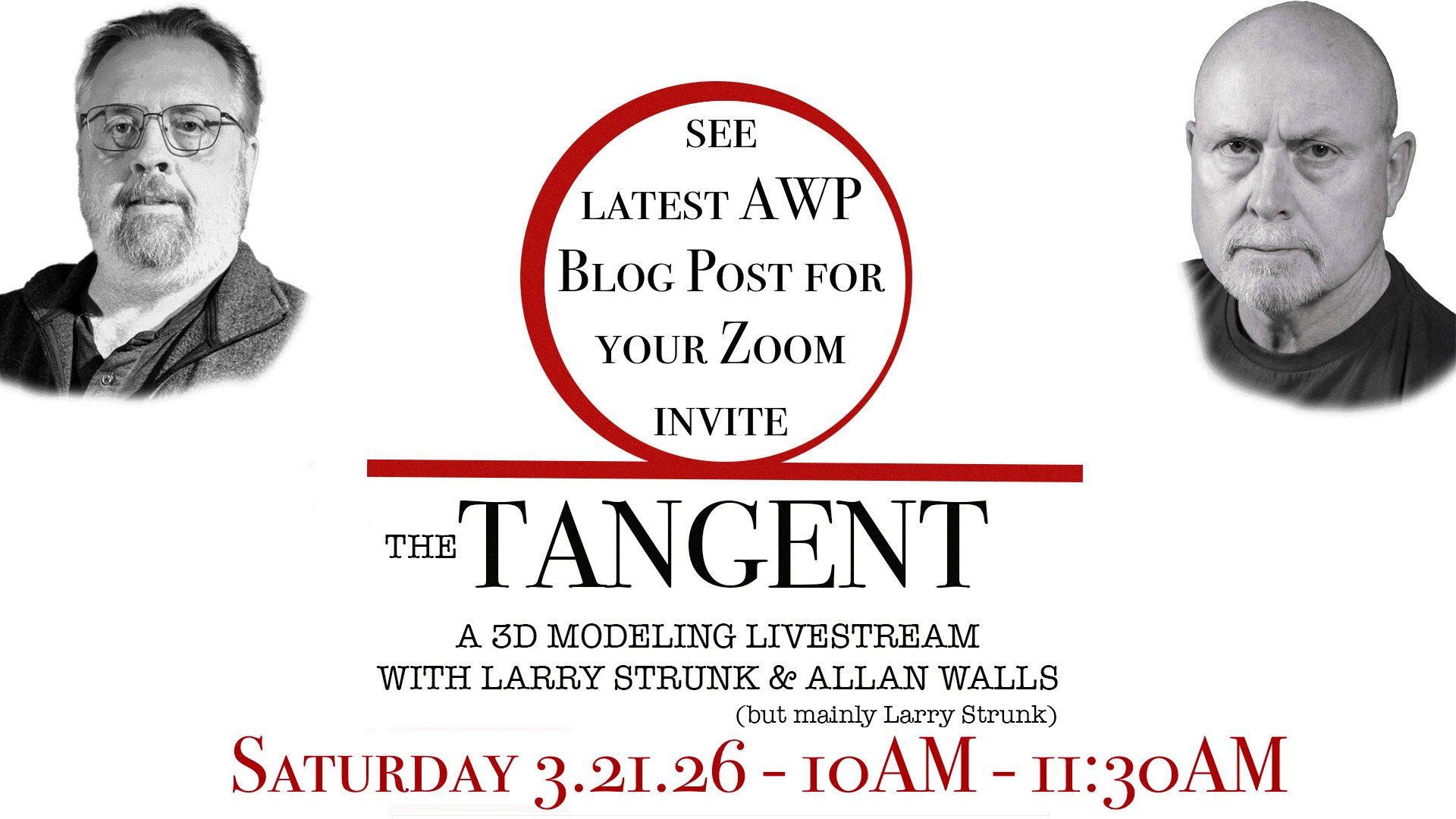
There is no Pzoom this weekend but it is time for for Tangent - your 3D modeling and making live discussion with Larry Strunk and myself, The topic for this month is a closely held secret that only Larry “the Tangent” Strunk is privy to. I will ask him and then pass it on to you during the upcoming livestreams. But whatever the subject is, you need to be there and for that you will need an invitation - which happens to be right here -
Allan Walls is inviting you to a scheduled Zoom meeting.
Topic: Allan Walls’ Tangent with Larry Strunk
Time: Mar 21, 2026 10:00 AM Central Time (US and Canada)
Join Zoom Meeting
https://us02web.zoom.us/j/6916802815?pwd=TS9tZi9ZL1NXeVUvOUF4eTg5YjdlZz09&omn=87555629837
Meeting ID: 691 680 2815
Passcode: 678122
Join instructions
https://us02web.zoom.us/meetings/87555629837/invitations?signature=T5HW0sP6H2JBFf1k3Jq13se3OPwlii_NvvnZS7NDrZ0
This is a free workshop and a fun way to spend an hour and a half on a Saturday morning. So bring your questions, your latest design masterpiece, your enthusiasm, and your photographer friend from across the street!
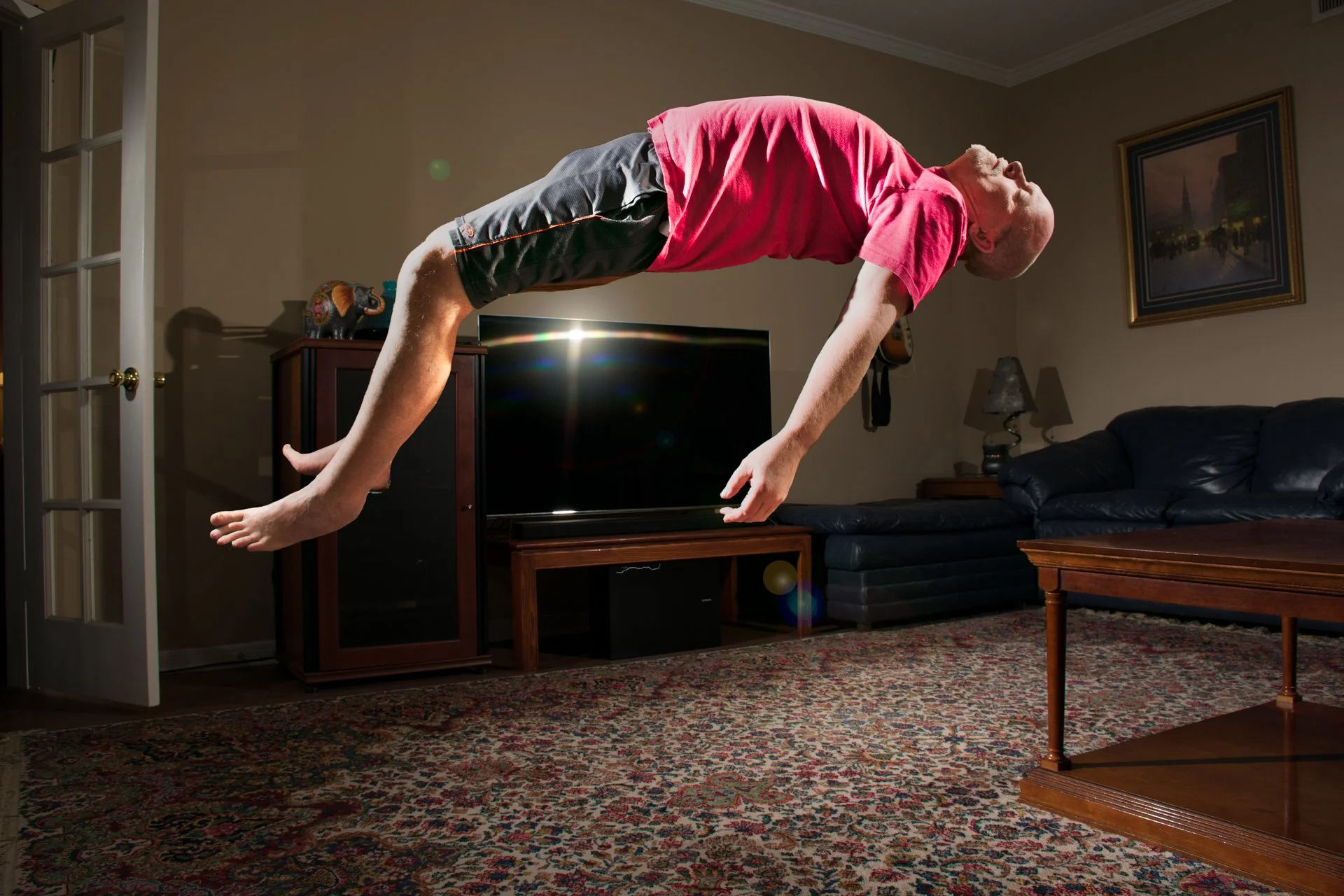
Another very old composite - tougher than it looks but loads of fun
While we are talking about coming attractions, please do not hesitate to eave me a message if there is something you would like to see us discuss in either of our weekly streams. I love getting requests for topics, especially when it is something we have not tackled before. I usually make a priority of these requests and will also give you credit for the suggestion (if you wish). You can leave a message in the chat window during any stream, during live Zoom meetings, or through the Walls App (walls-app.com). I look forward to seeing what fresh ideas you want us to look at!
With that out of the way…
A Taxing Weekend
I spent most of the weekend finding and organizing my annual tax return documentation. It is because of this annual ritual that I worked so diligently to master the art of procrastination. Had I not done so, this horrible task would have been “done and dusted” by the first week in January. Instead, I have put this off until the last possible instant. My CPA enforces a strict deadline for receiving all this documentation - miss it and you need to find a new CPA - or learn how to file your own business return (never a good idea, IMHO).
For those of you who have never had this particular pleasure (how have you managed to avoid it?!), the experience can be summarized as follows: you begin the process convinced that, over the last year, you have blossomed into a responsible and reasonably organized adult human being and that this year everything will be different, and then, somewhere around the four hour mark, that encouraging fantasy gives way to the hard truth that you are actually very disorganized and that absolutely nothing has changed since last March.
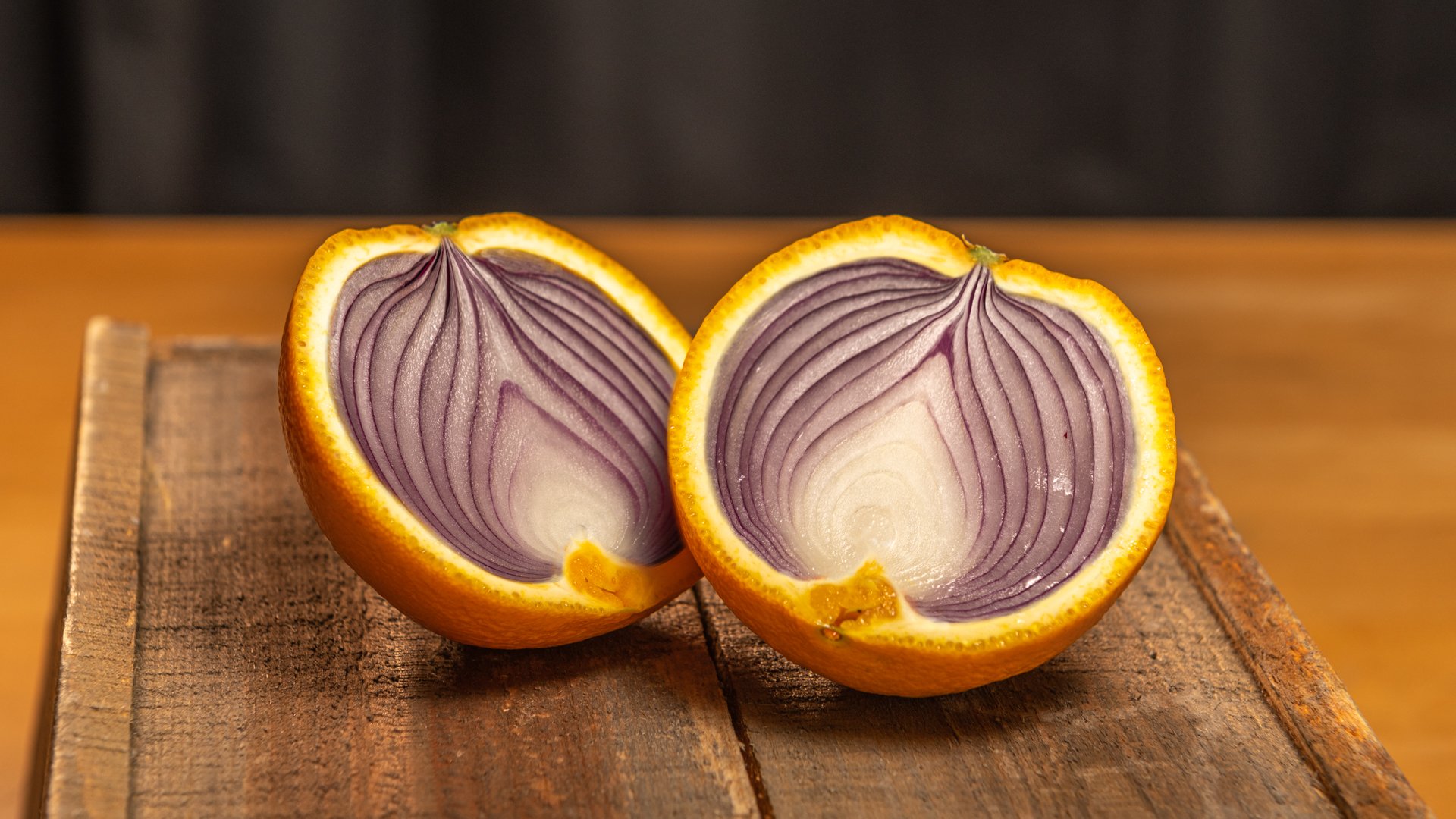
An ornion
Every year I promise myself that this will be the year I keep everything tidy. A folder for travel receipts. A folder for equipment purchases. A folder for business expenses. A folder to hold the other folders. Why not? In for a penny, in for a pound! I can usually stick with this plan for several days, but after tax time I seem to lose all interest in next year’s tax season, forget all about my foolproof folders-in-folders tax-documentation organizing initiative, and slip back into a comfortable oblivion that almost guarantees taxation will not cross my mind again until my first W-99 arrives in January.
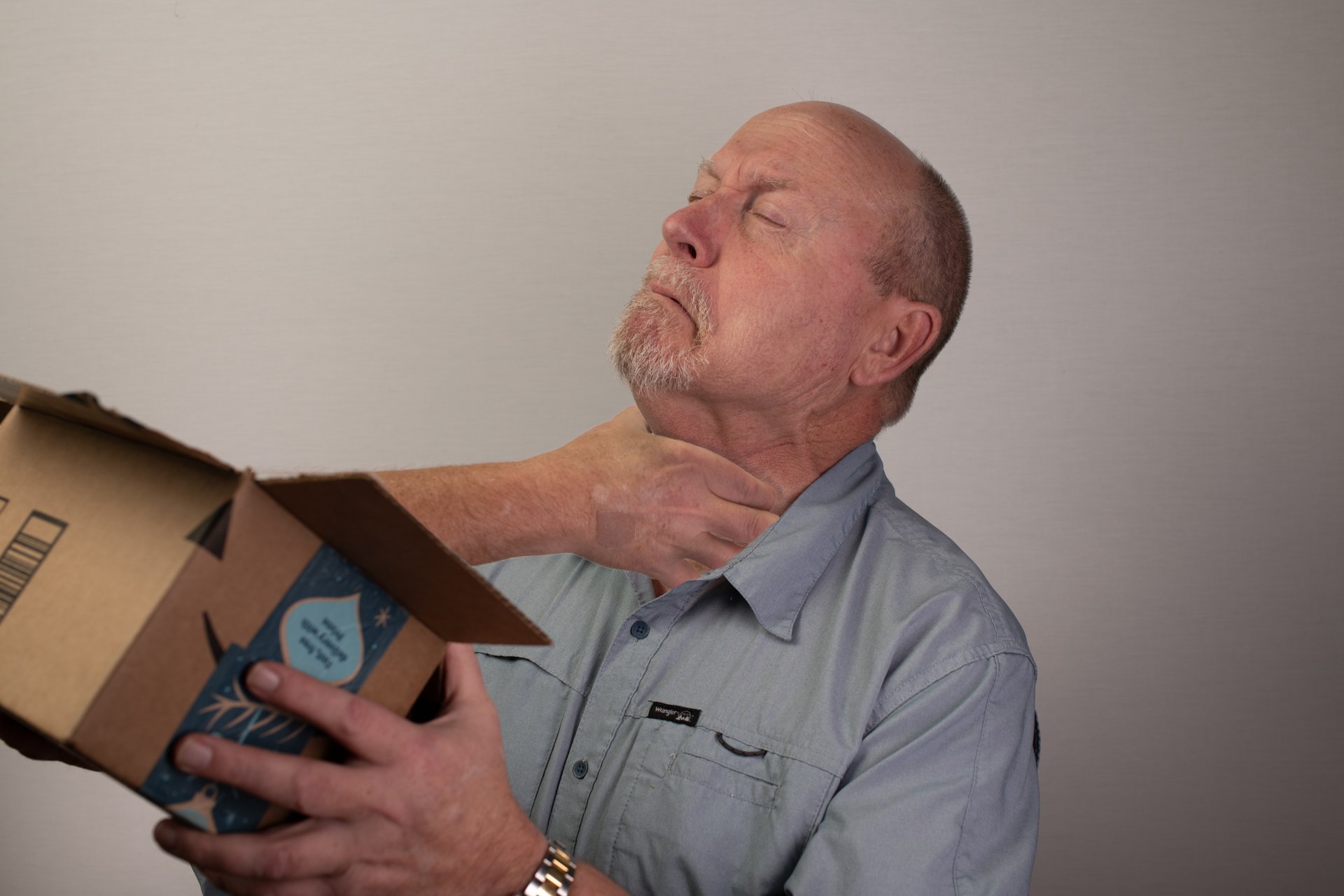
Yep - my arm
And every year the process ends the same way — with me sitting at the desk, weeping softly, surrounded by several piles of faded, crumpled paper, mostly receipts and mostly illegible. Going through the readable receipts I agonize over which pile they belong in:
“Is Budweiser a business deduction?”
“Can I claim the neighbors’ six children as dependents?”
And the truly haunting question:
“How much longer until the IRS will no longer require tax returns because they already have all our receipts, and everything else about us and your finances, neatly organized into electronic folders?”
Motivated by the possibility that this will be the last tax return I have to prepare (before the IRS does it for me), I redoubled my efforts, assigning scraps of paper to random stacks until everything had made it into one of the many envelopes.
By late Sunday afternoon I had reached the stage that accountants refer to as philosophical exhaustion, where numbers seemed less real and more like a cruel joke invented by the computer that is running my simulation.
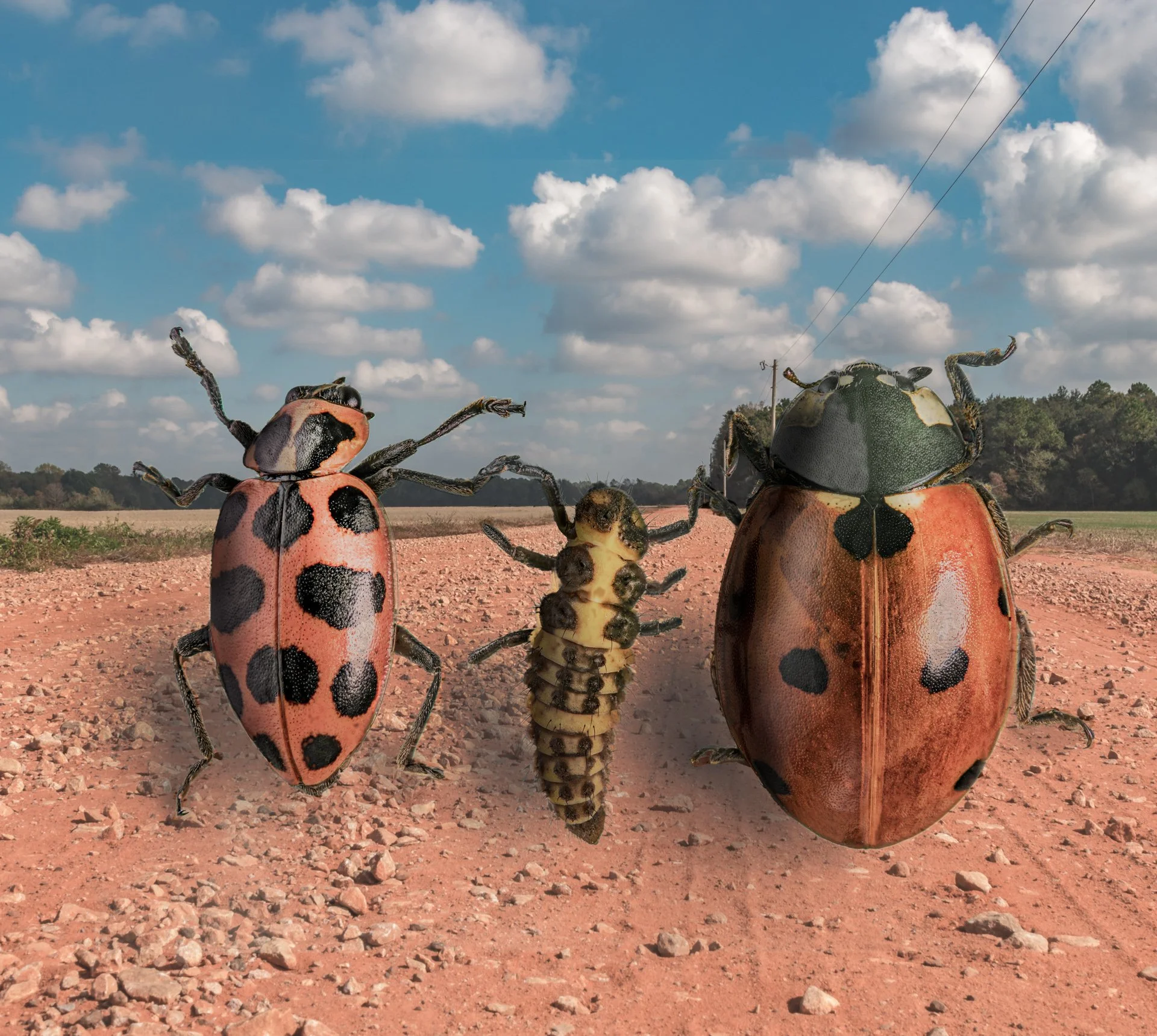
First dayof the summer holiday
Eventually everything was assembled, categorized, and digitized ready to be pumped into the mysterious electronic void where tax returns are whisked away, only to appear on the desk of your over-stressed, under-appreciated CPA. Hitting “Send”, I leaned back in my chair, and experienced the familiar sense of relief that comes from finishing a deeply unpleasant but necessary task.
And before long, my exhausted brain was free to return to pondering the really important stuff - macro photography, for example.
A Small Confession About Photography
There is something that photographers rarely admit in polite company.
We are not nearly as honest as we pretend to be.
Now before anyone panics, I don’t mean dishonesty in any moral sense. Photographers are, by and large, decent people. But the moment we begin manipulating light, selecting lenses, choosing angles, stacking images, or cropping frames, we are already making decisions that reshape reality.
In other words, the photograph stopped being “pure reality” a very long time ago.
Macro photographers in particular live in a strange middle ground. We claim to be documenting tiny worlds, but the truth is that we constantly intervene.
We move leaves.
We reposition insects.
We focus stack dozens — sometimes hundreds — of images to produce a depth of field that simply does not exist in nature.
And then we act surprised or offended when someone brings up the subject of compositing.
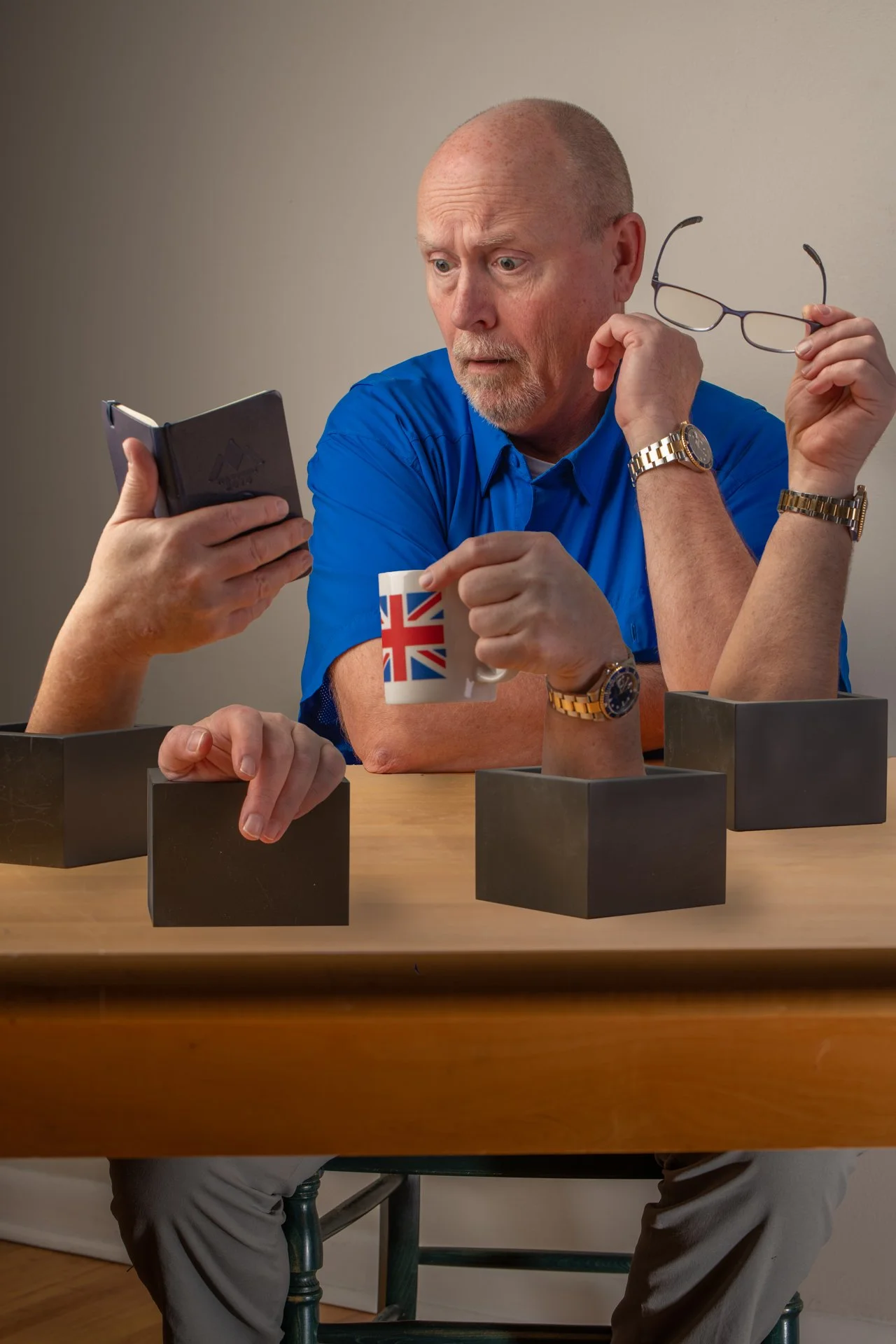
armed to the teeth
The fact is that focus stacking itself is already a composite.
Once we have combined fifty exposures into a single image, have we quietly crossed the border from documentary photography into the broader, fuzzier territory of computational photography and the constructed image? We may well be telling the truth, but now we are doing so with tools that rearrange reality in subtle ways.
Most of us accept this without a second thought.
Where things become interesting is when we push that idea a little further.
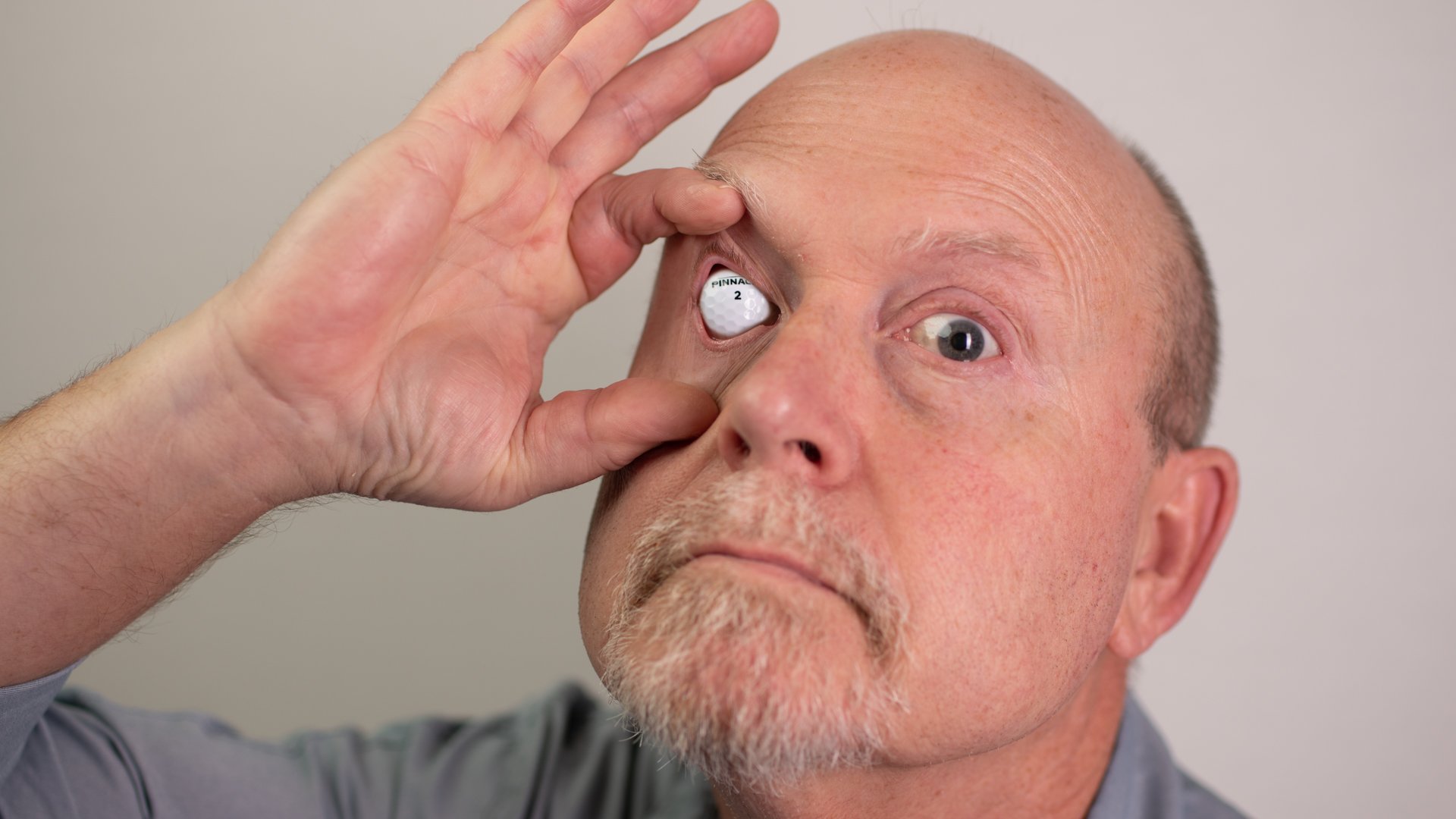
Fore!
The Quiet Superpower of Macro Photography
Macro photographers possess a peculiar advantage that most other photographers do not.
We work at such small scales that the boundaries between documentation, problem-solving, and imagination become interestingly blurry.
The physics of macro photography forces our hand. Depth of field is microscopic. Lighting is difficult. Subjects move when they feel like it. Backgrounds are rarely cooperative.
So we invent solutions.
Sometimes those solutions are purely technical: stacking, blending exposures, repairing minor damage in a specimen.
Sometimes they are corrective: removing distractions, cleaning backgrounds, improving lighting balance.
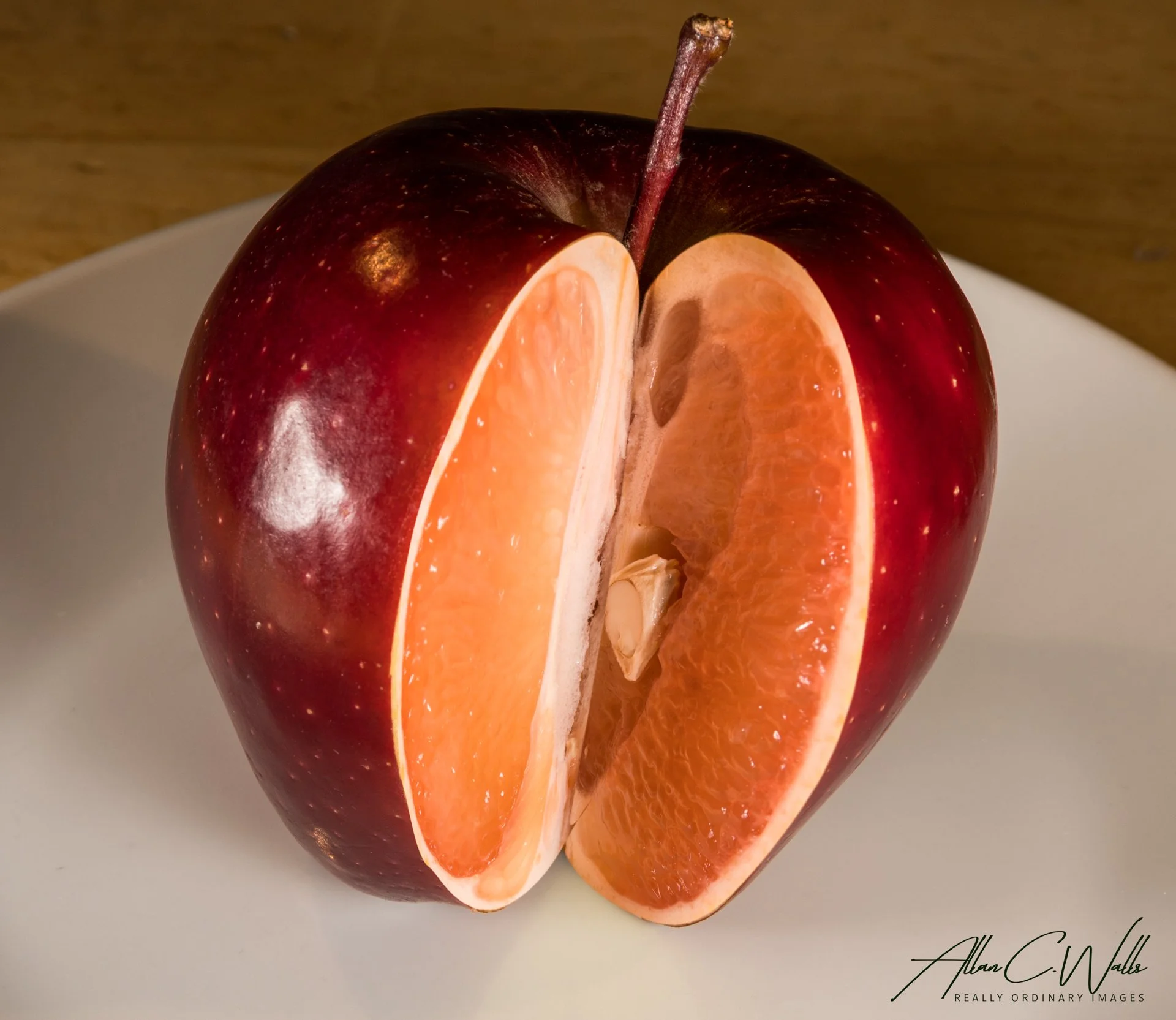
my very first attempt - an orple
And sometimes — if we allow ourselves to be a little playful — they become creative.
That is where compositing enters the conversation.
I am a huge fan of creative compositing but need to clarify what that is not. This kind of image engineering is not about misleading, deceiving, or tricking anyone. It is a tool for expanding our creative reach, for augmenting reality to make more unique and engaging art, and for telling visual stories that might otherwise never have been told.
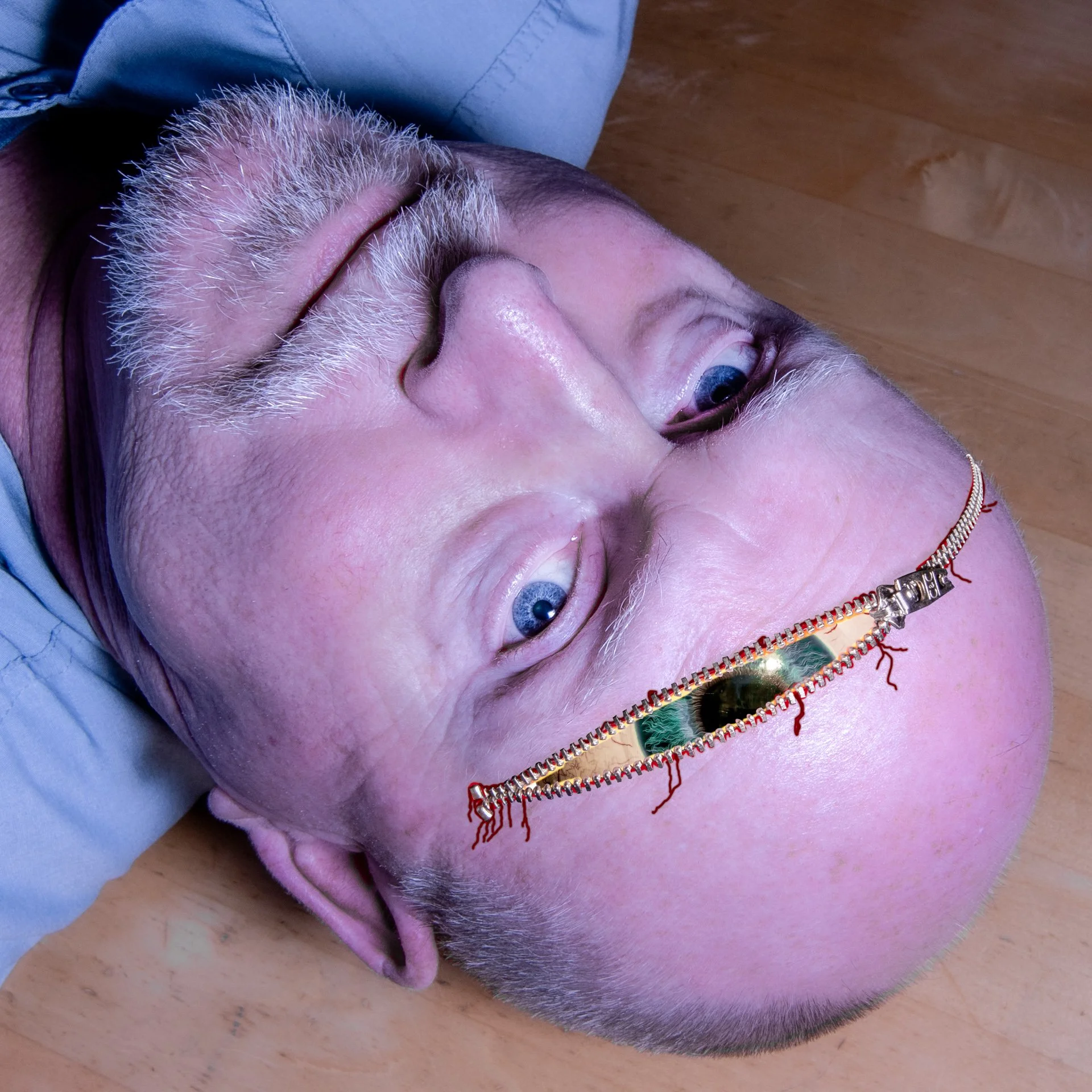
Weird, I know, but blame my imagination
Compositing is a very powerful tool, with countless creative applications, that teaches us how to ”see” a complex scene, with difficult lighting, and arrange the physical elements for best effect. Learning to composite, and then practicing the art periodically and with intent (and guidance if possible), will make any of us into better photographers, better storytellers, better editors, and more observant stewards of our planet.
On Thursday afternoon we’re going to talk about compositing and compositing in macro photography. The main thrust of my comments will be to introduce the broad concepts of compositing and how these ideas could be put to work in our creative processes.
I am not going to try to teach the individual steps taken in creating a composite (though I would love to do that, should there be any interest in doing so), but instead will attempt to answer this question: “What could we create if we learned how this works?”
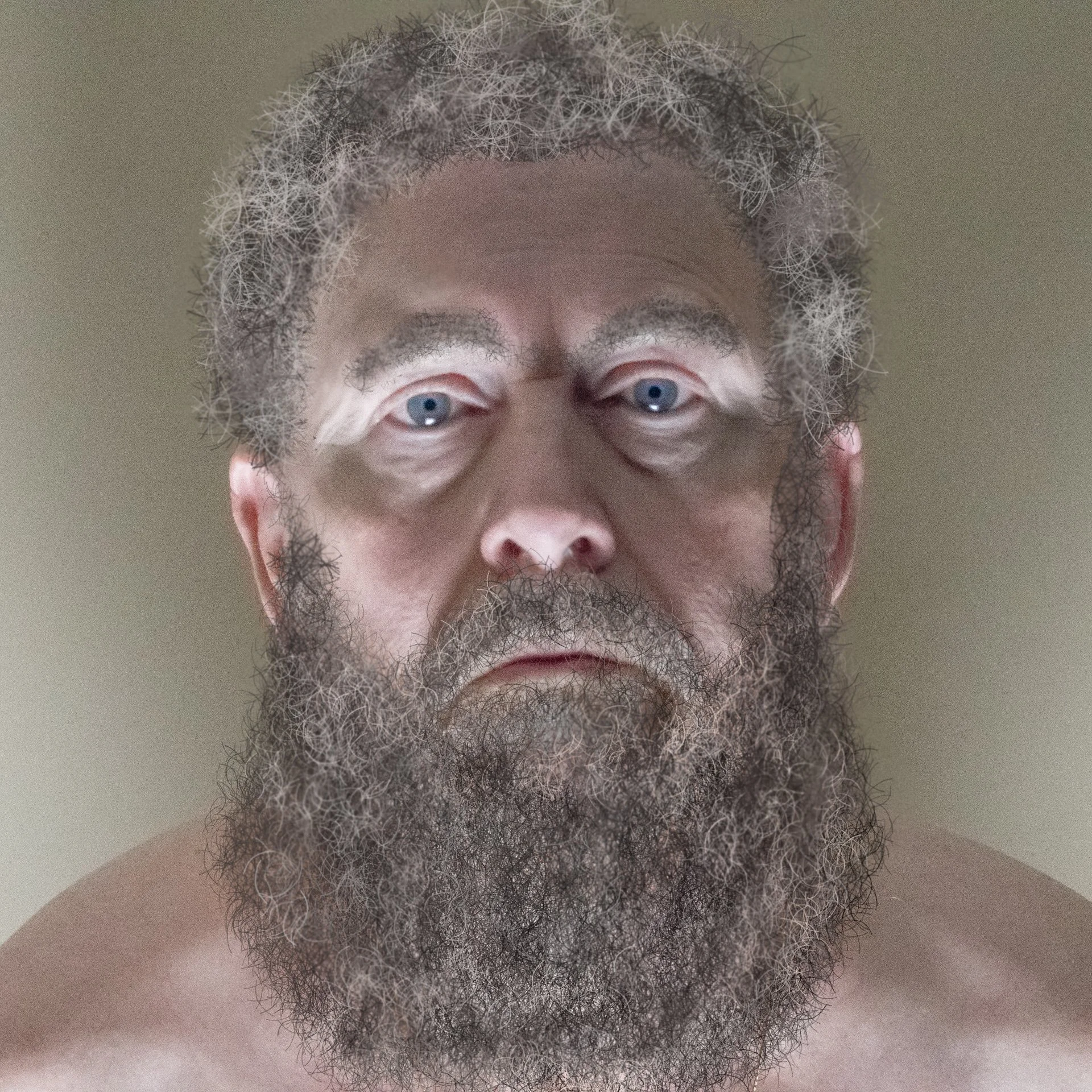
Made as a joke but had so much fun making it I ended up growing a beard just like it
We will look at some real examples, including a few of my own images, and I’ll walk through the thought process behind making them. What problem needed solving? What pieces had to be assembled? And what small decisions make the difference between an image that feels believable and one that falls apart immediately?
There are a few surprisingly simple principles that make composites work, and once you see them you cannot easily unsee them. I will lay out the principles that are central to my style of compositing and may even get to a short demonstration, time and bandwidth permitting.
Just enough to show how a photograph can evolve when you give yourself permission to treat it less like a record and more like a construction project.
Macro photography already reveals worlds that most people never notice.
Compositing simply gives us permission to push those worlds a little further.
In compositing we are not trying to fake reality. We are using our imaginations and our hard-won skills to craft an alternative, imaginary interpretation of reality.
Oh, and I nearly forgot to state the obvious - it is a huge amount of fun.
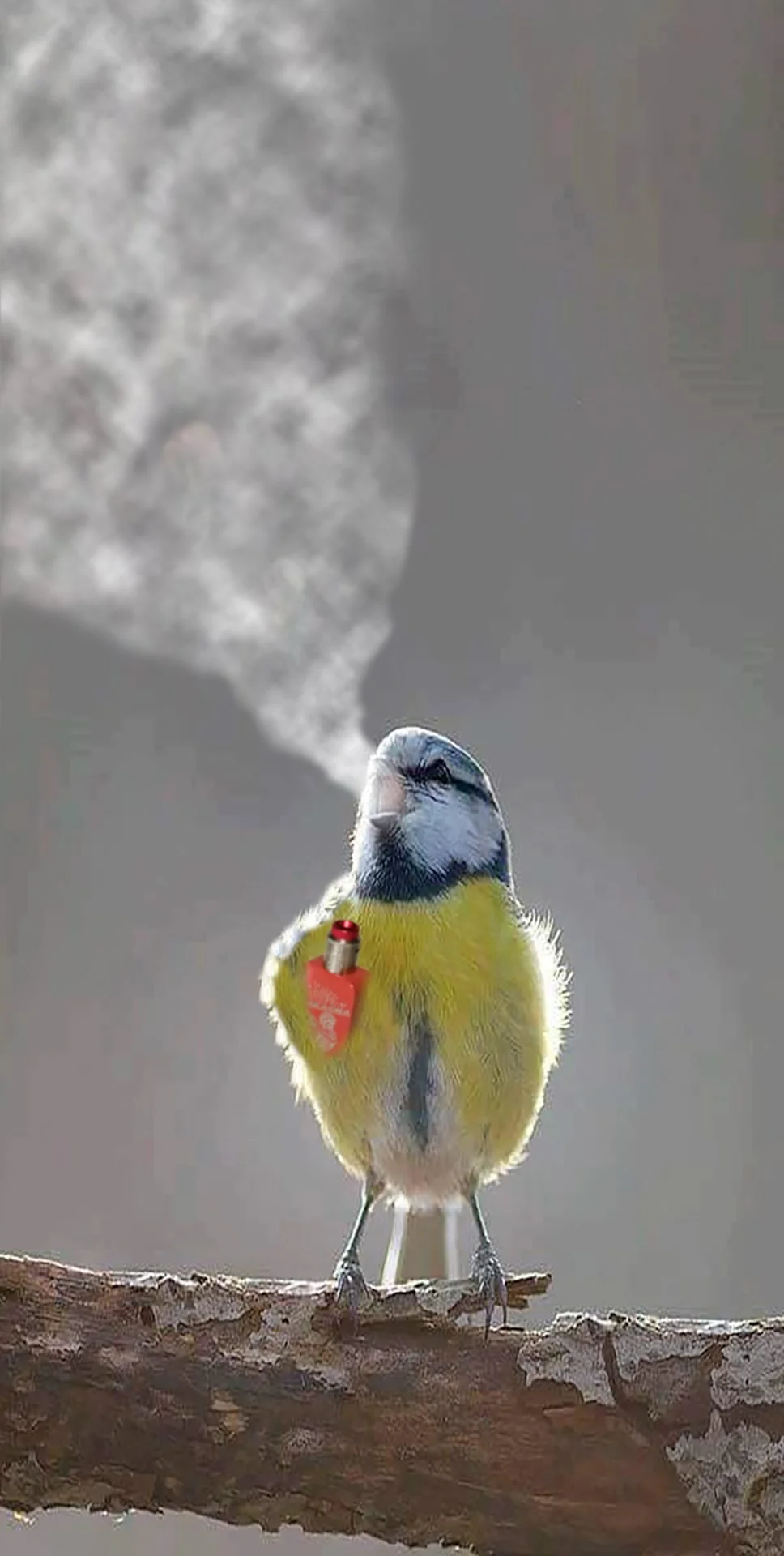
Tit-vaper
If you have never tried it, give it a test drive. Experiment with the techniques and tools. See what you can imagine into existence. Experience the exhilaration of seeing a version of reality that is all yours. Maybe this will be the theme for an upcoming competition. If nothing else, it will be a great excuse for putting off your tax return for another week or two.
I must dash - I have a Livestream starting in a couple of hours and I am not ready! Have a great week!
Allan