

Photography and Agentic AI
/Turning Eight Years of Work Into a Living System
Artificial intelligence is rapidly changing how creative professionals work, and photographers are no exception. In this article, I explore how agentic AI — a structured AI assistant built from large language models — can help organize, retrieve, and repurpose years of educational photography content. Drawing from my experience as a macro photography educator, I explain what an AI Agent is, how it differs from a basic chatbot, how it works behind the scenes, and what photographers should understand about accuracy, hallucinations, ethics, and long-term maintenance before building one of their own.
a wee robot
I am not a computer expert — not by any stretch of the imagination — but I have not been able to resist the attraction of artificial intelligence.
We are living through a period of change that feels historically unprecedented. Computers are rapidly approaching — and perhaps already crossing — what futurist Ray Kurzweil described as the Singularity: the moment at which technological intelligence surpasses human intelligence and begins improving itself faster than humans can meaningfully understand or control. Whether or not we have fully reached that point is a matter of debate, but few would deny that we are living in a period of extraordinary acceleration.
two wee robots deliver lunch
Watching this unfold is both fascinating and unsettling. At some point over the last two years, I made a conscious decision that I would not be a passive observer of this process. Since the earliest public releases of large language models, I have tried to stay informed and to explore whether these developments might have practical relevance to my work as a macro photography educator.
What follows is not expert advice. It is a report from the field — my experience building what is known as an AI Agent to address a growing problem within my own body of work.
A computer chip - sensor
The Problem: When Creation Outpaces Organization
Modern photographers — especially those who teach — face a peculiar paradox. We create more content than we can effectively organize.

mosquito’s eye, for no particular reason
After eight years of videos, livestreams, blog posts, downloadable PDFs, lesson notes, gear breakdowns, and thousands of viewer interactions, I found myself sitting on a tremendous archive of useful material that was becoming increasingly difficult to access. The problem was not a lack of information. It was retrieval.
I did not need more content. I needed a way to find and reuse what I had already created.
What I really needed was an archivist — someone who understood my work well enough to locate a specific explanation from a livestream three years ago, compare it with more recent guidance, summarize the differences, and present the result in a useful format.

Hoverfly takes a rest from hovering
The question that naturally followed was this: Isn’t that exactly the sort of task large language models are designed to handle?
It seemed straightforward. It was not.

What my desk would look like if it were clean and tidy
What AI Is — and What It Is Not
Before describing the solution, it is important to clarify terms.
Artificial intelligence, broadly speaking, refers to software systems that perform tasks we associate with human cognition: recognizing patterns, generating language, classifying information, and making predictions. Large language models, or LLMs, represent a subset of this field. They generate text by predicting the most statistically probable next word or token based on context.
The mother of all boards
An LLM does not understand in the human sense. It does not think, reason, or possess awareness. It generates output based on probability patterns learned from vast amounts of data. Its fluency can easily give the impression of comprehension or authority, but fluency is not the same as truth.
This distinction matters. An LLM can be extraordinarily useful. It can serve as a catalyst for ideas, a drafting assistant, and a tool for synthesis. But it is not infallible, and it does not possess judgment. The responsibility for accuracy remains entirely with the human operator.
Wrong kind of agent
What Is an Agent?
A standard chatbot answers a prompt and stops.
An AI Agent is something more structured. It is a system that can take a goal, break that goal into steps, retrieve relevant material, apply rules, and generate structured outputs. It may use tools such as file systems or databases, and it can be constrained by explicit behavioral rules.
The system I began building — which I have tentatively named the AWP Content Agent — is trained exclusively on my own published material. It is intentionally isolated from the broader internet. Its purpose is not to generate new opinions, but to retrieve and organize what I have already said.
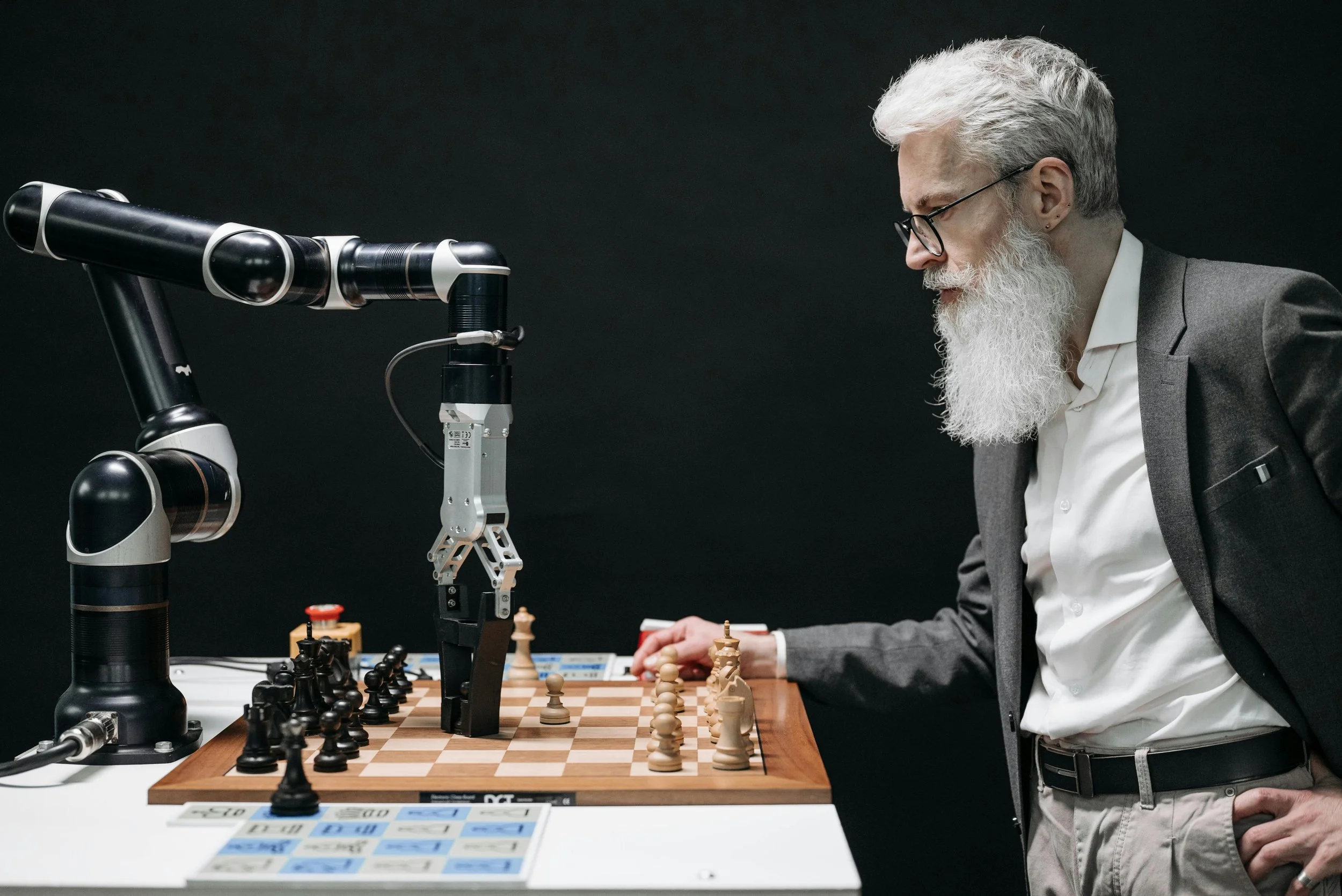
Clever robot (right) plays chess with robotic arm (left) and loses
In practice, it functions as a librarian, research assistant, editor, production assistant, and quality-control reviewer. It can locate prior explanations, summarize recurring themes, assemble structured lesson outlines, and identify contradictions across time.
For someone managing a large technical archive, this is not a novelty. It is a force multiplier.
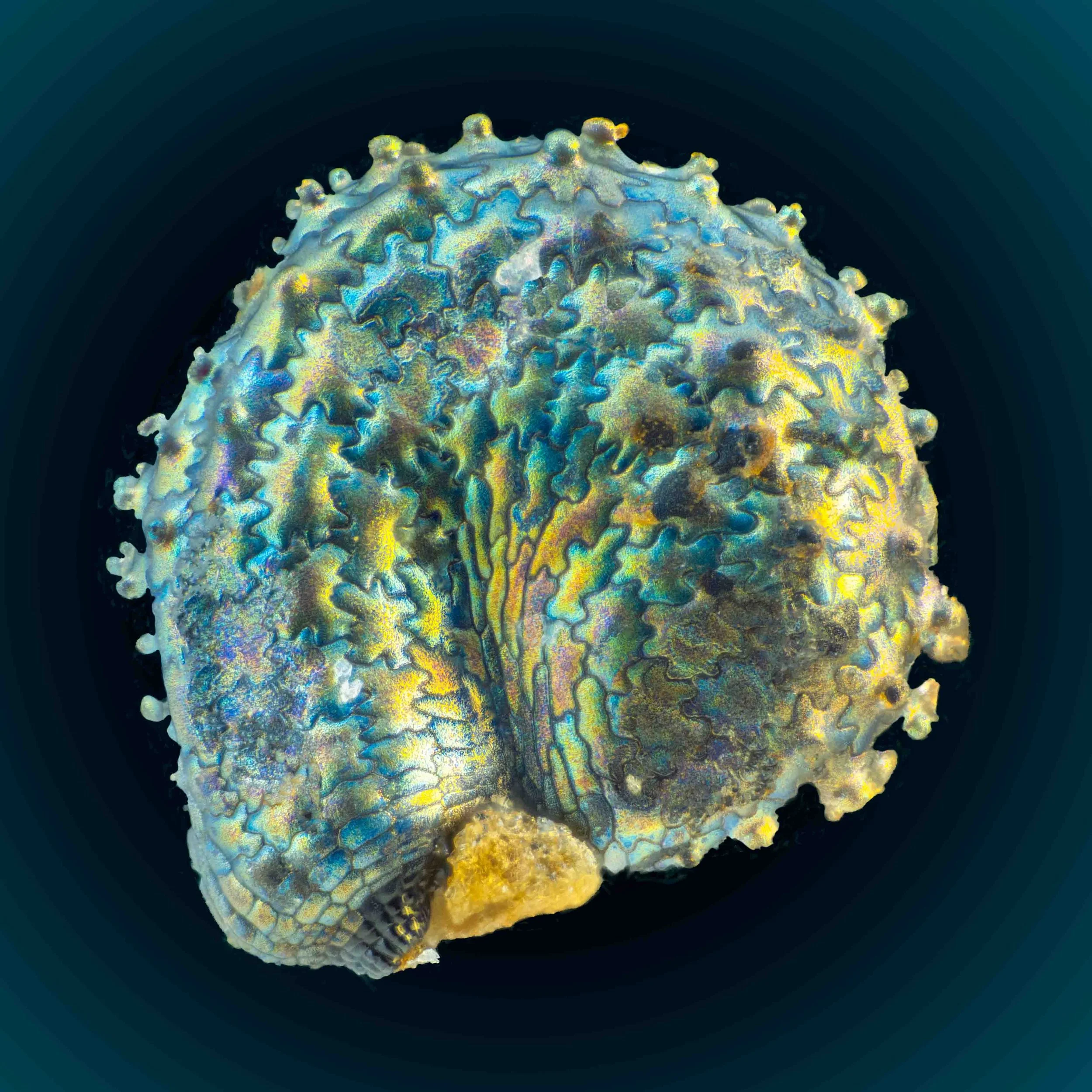
Portulaca seed (from the planet portulaca)
Why This Matters in Macro Photography
Macro photography is unusually dense with technical variables. Discussions of magnification quickly intersect with numerical aperture, diffusion geometry, stacking artifacts, vibration control, rail calibration, and specimen preparation. Explanations overlap. Advice evolves. Positions refine over time.
As a result, the same foundational concepts may appear across dozens of videos in slightly different forms. Over the years, improvements in understanding inevitably introduce inconsistencies. Viewers asking thoughtful questions often require cross-referencing multiple past explanations.
Manually managing this level of complexity becomes impractical.
An agent grounded in my own curated archive has the potential to retrieve all instances of a specific topic, prioritize the most recent guidance, and present a cohesive summary. It can transform a static archive into a working knowledge system.
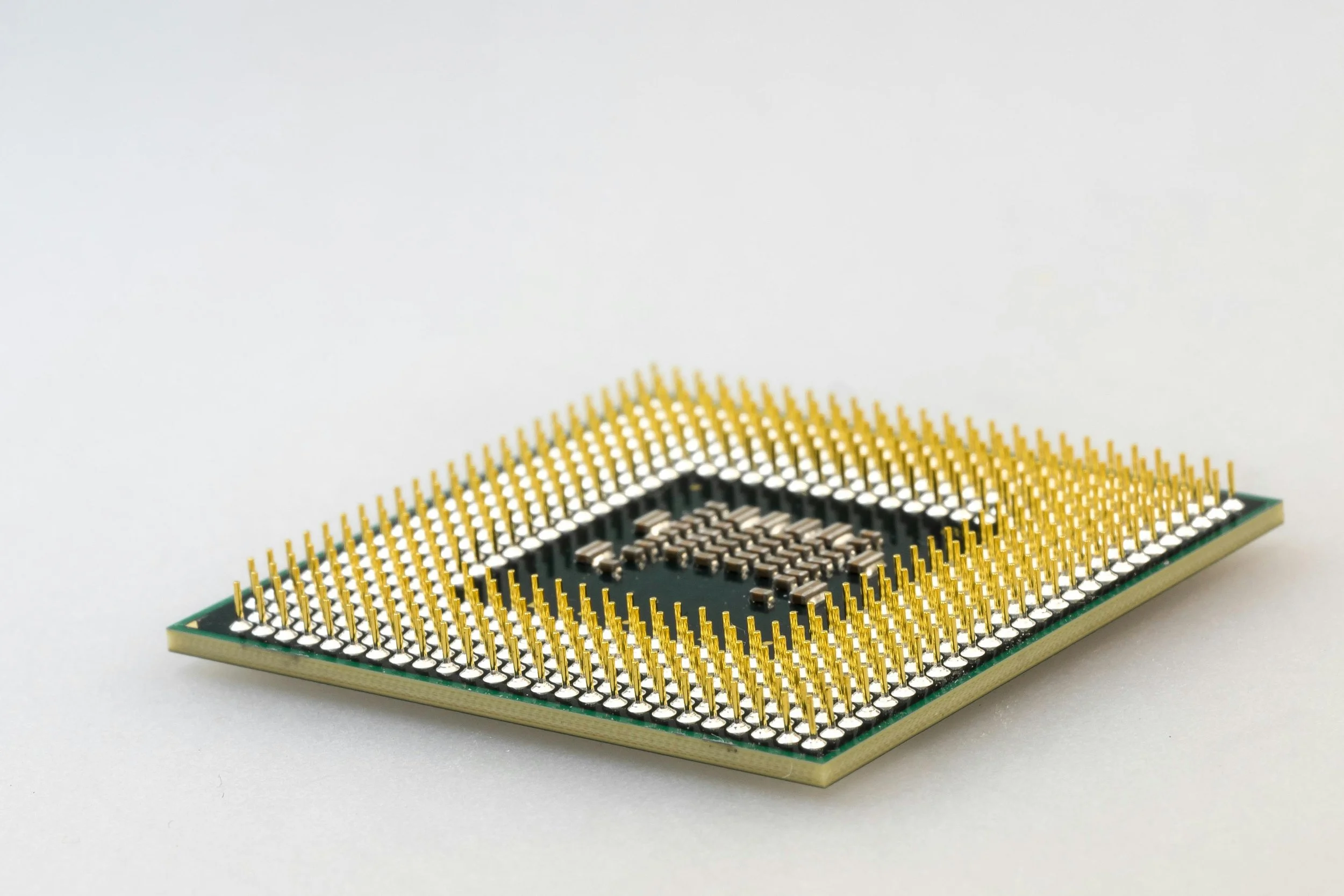
An escaped computer chip
The Hard Lesson: Curation Determines Quality
I initially imagined that I could simply “feed” my entire body of work into an AI system and allow it to organize everything automatically.
In reality, the quality of the agent depends almost entirely on the quality of the corpus it is given. Content must be cleaned, structured, labeled, dated, and tagged. Canonical versions must be separated from drafts. Outdated guidance must be clearly marked. Metadata must be consistent.
Without disciplined preparation, retrieval becomes unreliable. The model becomes prone to hallucination, contradiction, or overconfidence.
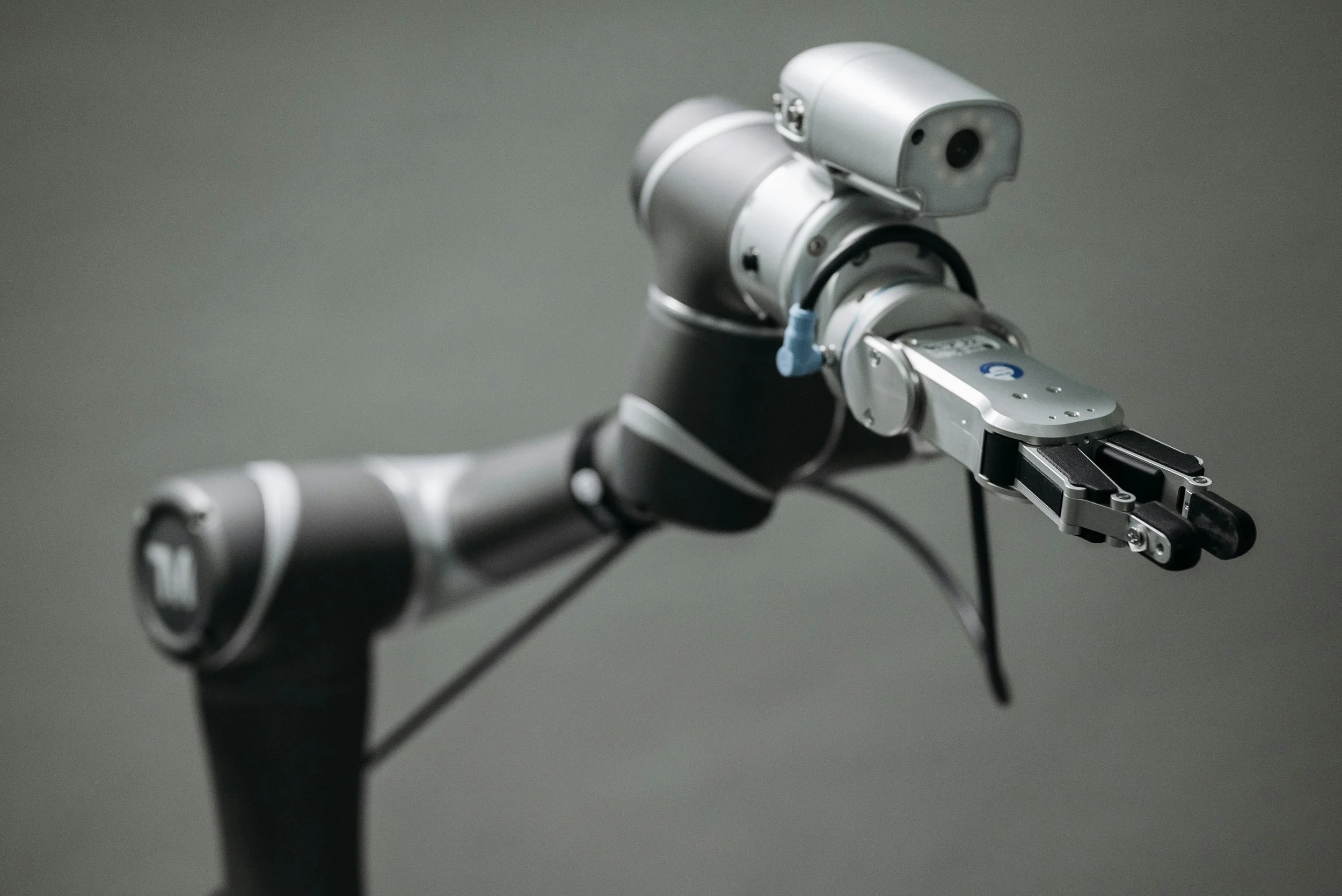
scruffy looking robot arm with optional laser canon
Building a functional agent is less about clever prompting and more about systematic content architecture.
How an Agent Works Behind the Scenes
Although the technical details vary by platform, most agent systems follow a similar workflow.
First, content is ingested and converted into structured text. Next, the system indexes that text so that it can quickly retrieve relevant passages. When a question is posed, the system searches the corpus, assembles the most relevant segments, and passes them to the language model as contextual input. The model then generates an answer conditioned on that retrieved material and on the rules provided by the builder.
The critical point is that retrieval precedes generation. If retrieval fails, generation may still occur — and that is where hallucinations arise.
Because each platform handles indexing, ranking, and context assembly differently, no two agent systems behave identically. All, however, produce answers in the same confident tone.
Confidence, again, should never be mistaken for correctness.
Maintenance and Known Failure Modes

Lady compares her failure modes to those of her refurbished macBook Pro
An agent is not something you build once and forget. It requires ongoing maintenance.
New content must be added. Outdated advice must be retired or labeled. Major shifts in opinion should be date-stamped. Citations should be spot-checked. Hallucinations should be logged and used to refine the system.
Failure modes are predictable. An agent may misattribute quotes, rely too heavily on older material, retrieve incomplete context, or overstep boundaries by offering advice beyond its scope. There is also the human danger of automation bias — the tendency to trust outputs simply because they sound intelligent.
For this reason, I have imposed strict behavioral rules within the system. It must cite sources when referencing my prior statements. It must prefer newer material when contradictions exist. It must admit uncertainty when evidence is insufficient. It must not invent sources.

A good sign your computer is shot
These constraints do not eliminate error, but they significantly reduce risk.
Ethical Responsibilities

a blind greengrocer struggles with her scales
With powerful tools come responsibilities.
Any AI-assisted content should be clearly identified as such. The human creator remains responsible for accuracy, citation legitimacy, and ethical judgment. Sensitive or private material should never be casually included in a corpus without careful consideration of privacy implications.
An agent is a tool. It is not an authority, and it does not absolve its operator of responsibility.
Where This Is Heading
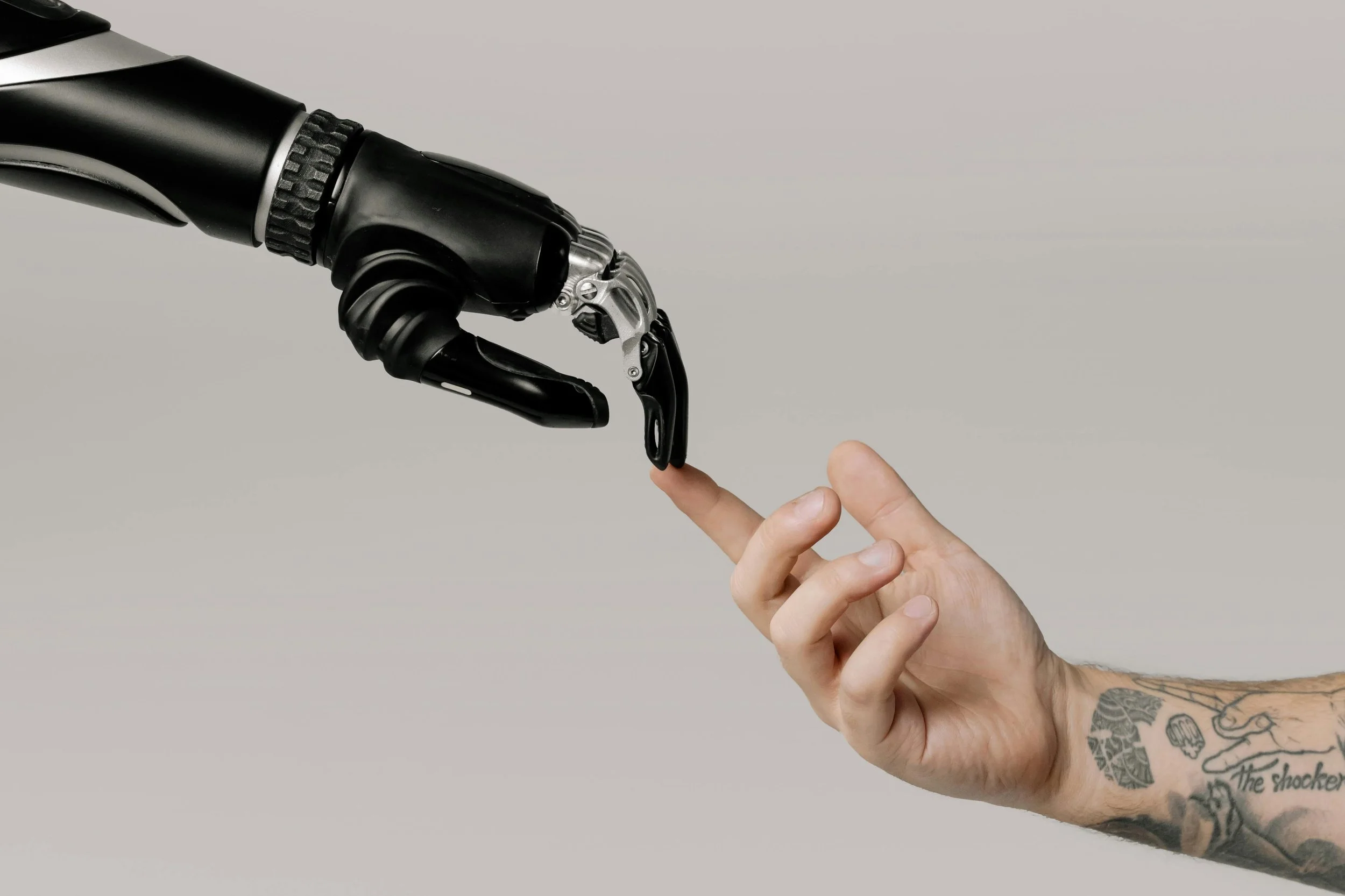
robot maker regrets using superglue to secure robot’s replaced index finger
For many photographers, building a custom agent may not justify the effort. The time investment is significant. But for educators or creators managing large technical archives, the advantage may shift from those who merely possess knowledge to those who can retrieve and apply it efficiently.
Agents should be thought of as apprentices rather than authors. They can fetch, sort, draft, and format. They cannot replace judgment, ethics, taste, or creative vision.
Photography remains a profoundly human act of attention. An agent cannot see for us.
But in the domains of organization, synthesis, and teaching, these systems can reduce friction and extend our reach. Going through this process has not made me a better photographer. It has, however, made me a more efficient educator and a more informed participant in a rapidly changing technological landscape.
For now, that is more than enough.

Summer evening on the gulf
The Week Ahead
Thanks to everyone who commented on the “Transition” series of Livestreams.It was a lot of fun to produce and should be useful to anyone new to field or studio macro photography.
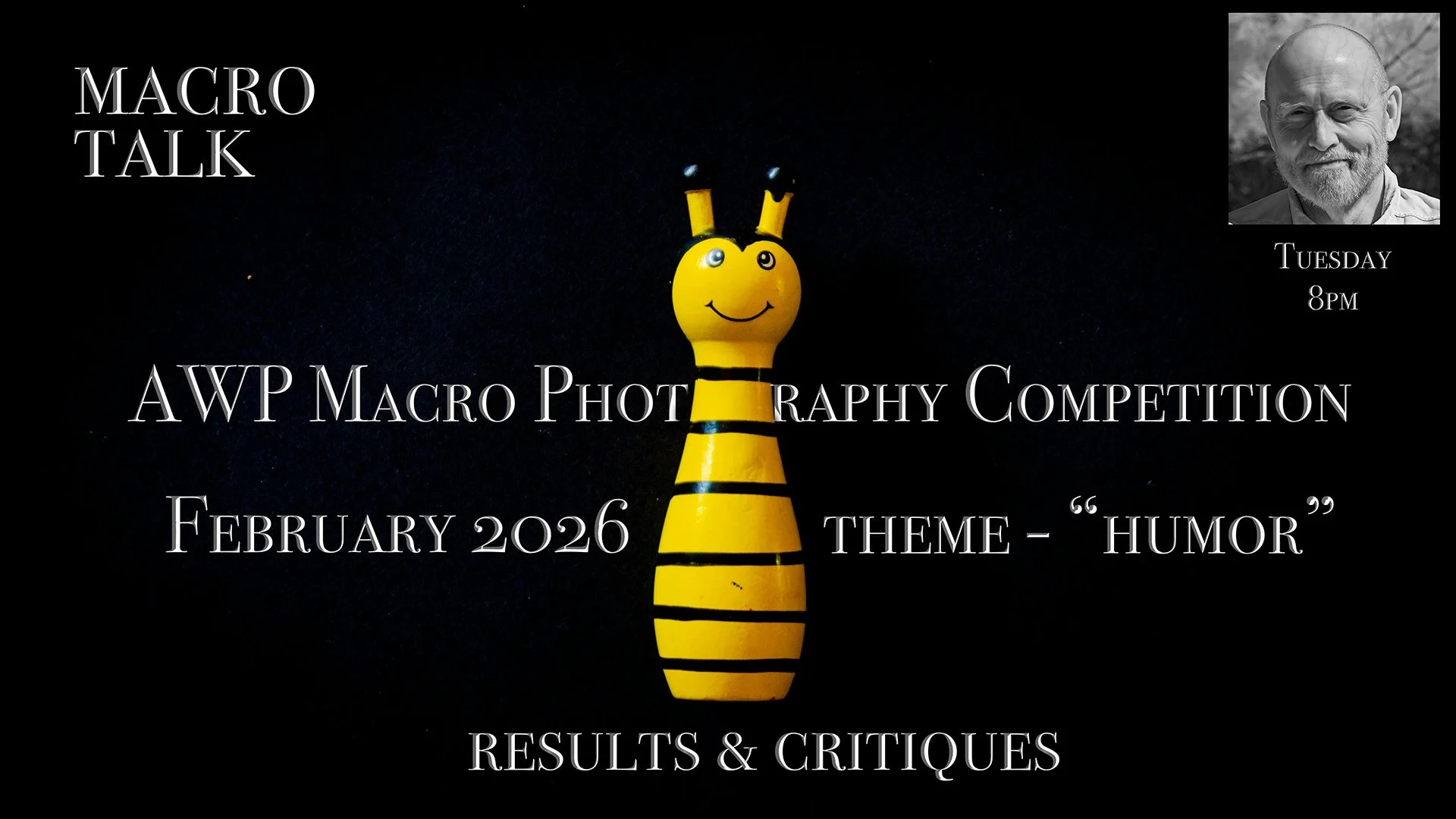
The coming week is going to be fun - the competition from February is over and I am starting the judging process today. It has been quite a while since I did a live discussion of the entries and announced the winners during a Livestream.That is what I am going to start the week with - a Competition Results Livestream - where I will show and discuss every entry and announce the winning images. That will be during Macro Talk, on Tuesday at 8PM. Here is your link… https://youtube.com/live/iyXXlhZJ8sw?feature=share
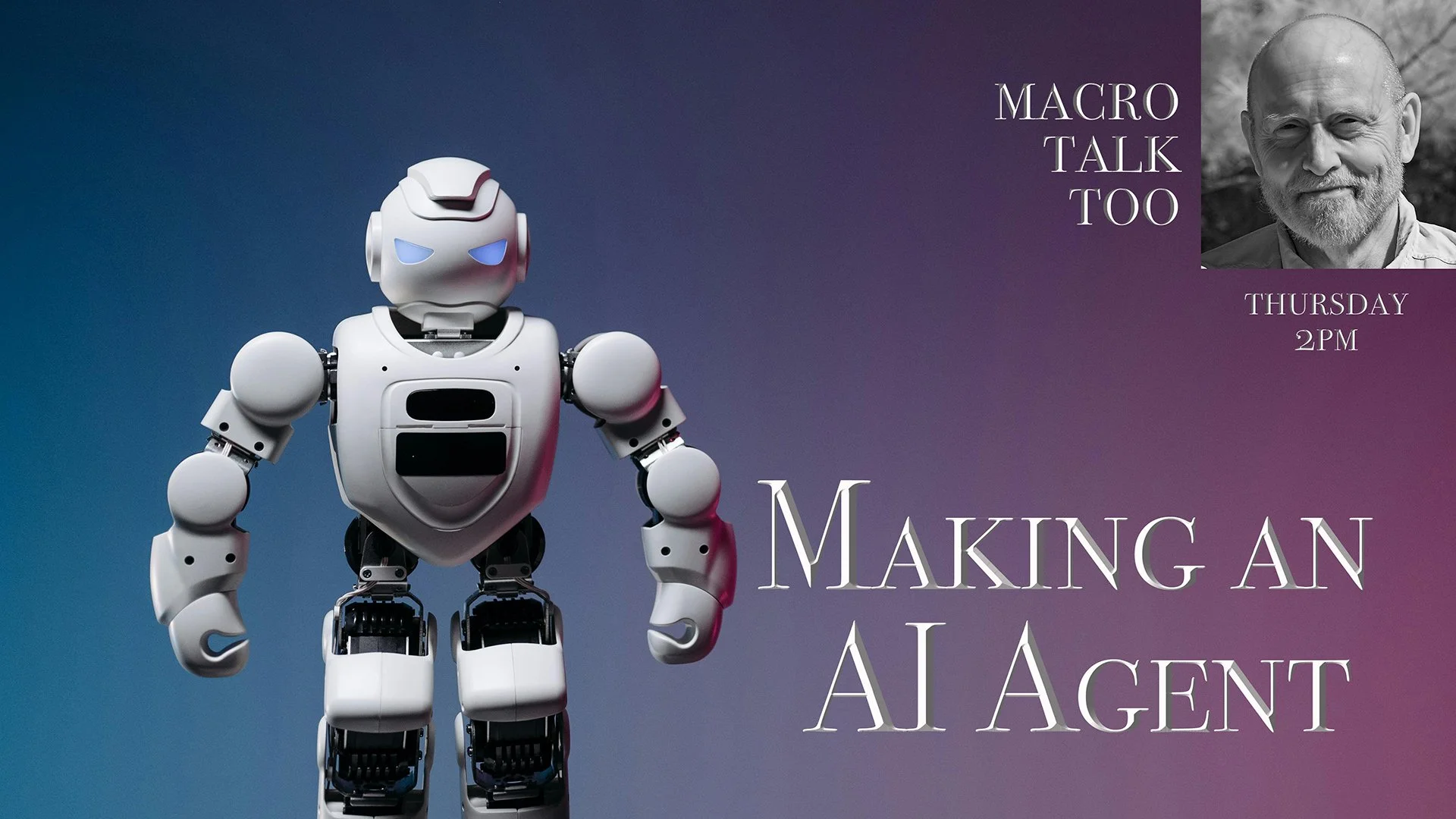
On Thursday I am going to walk you through the steps of creating your own AI Agent and showing you some of the ways in which this remarkable technology can help a macro photographer take better pictures while becoming more efficient. For more information, see below. This is your link to the the Macro Talk Too Livestream, at 2PM on Thursday afternoon … https://youtube.com/live/FKRqffUP8Js?feature=share
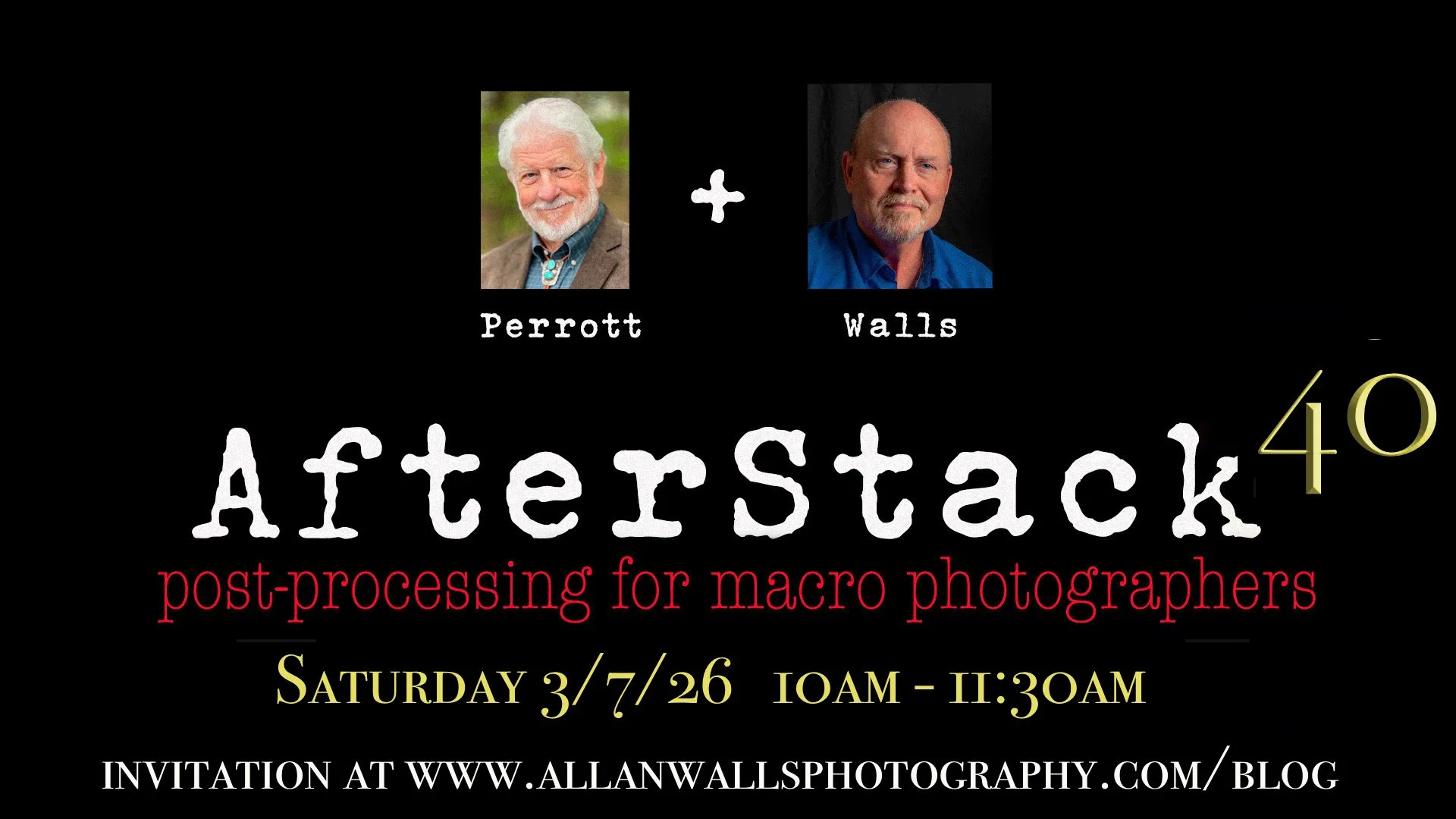
Saturday is the March AfterStack - #40 for anyone keeping track - and we are going to be addressing photoshop techniques for correction of focus stacking artifacts. It is free, it is fun, and here is your invitation…
Allan Walls is inviting you to a scheduled Zoom meeting.
Topic: AfterStack #40 - Correcting Stacking Artifact
Time: Mar 7, 2026 10:00 AM Central Time (US and Canada)
Join Zoom Meeting
https://us02web.zoom.us/j/86060739147?pwd=3nxx1ShFE7WWd4hCpyGyzWE154nzWO.1
Meeting ID: 860 6073 9147
Passcode: 966162
Join instructions
https://us02web.zoom.us/meetings/86060739147/invitations?signature=hGG14MPa8nlIBaoXyHA_marrFscNmf-kNII9EcN3FMI
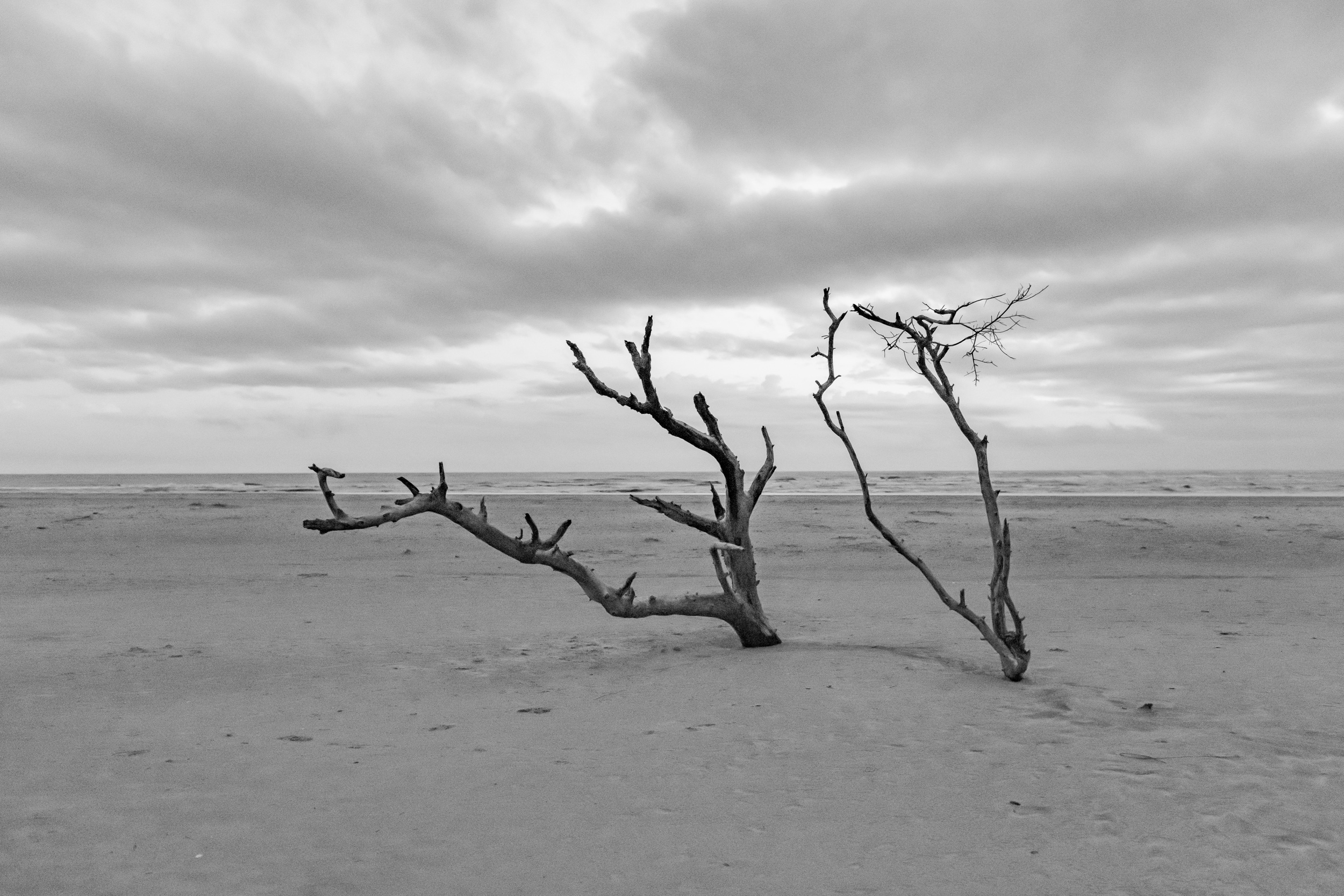
death valley, north carolina
And that is it for this week. We Weill be getting back to mainstream macro next week. I also have an announcement concerning the competition, but to hear that you need to come to Tuesday’s stream! Have a great week!
Allan