

Order, Disorder, and the Macro Mind
/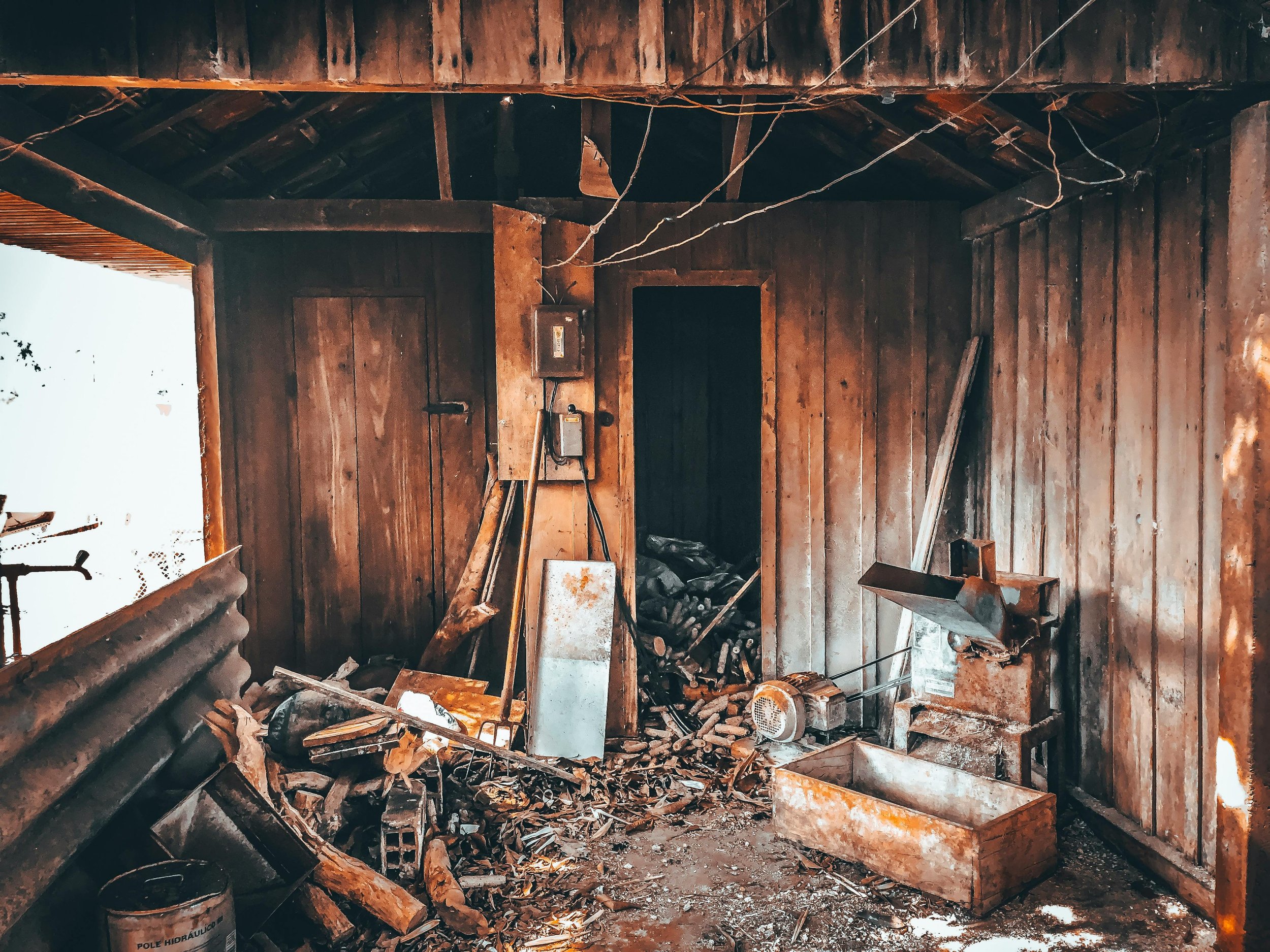
Not my studio - but close
Would you believe me if I told you that I was something of a “neat freak”? Or if I told you that I knew where every single piece of gear, every nut and bolt, every roll of tape, could be found in my studio? Well that is not 100% true, but it is close enough. I do have a long history of organizing my living and working spaces to make my work and my life comfortable, efficient, and predictable (and, in the process, driving my late spouse to the brink of madness). Fortunately, or unfortunately, it appears that that this particular manifestation of my latent obsessive/compulsive nature has gone into hiding, since my relocation to the Arctic Circle (AKA Peoria, Illinois). As a result, my subterranean sanctuary has become a frightful mess. Even more distressing, my efforts to get my workspace tidy and organized have met with a marked lack of enthusiasm. As a card-carrying black belt fatalist I could have simply left it that and recognized that I had morphed into a slovenly lout, and learned to live with it.
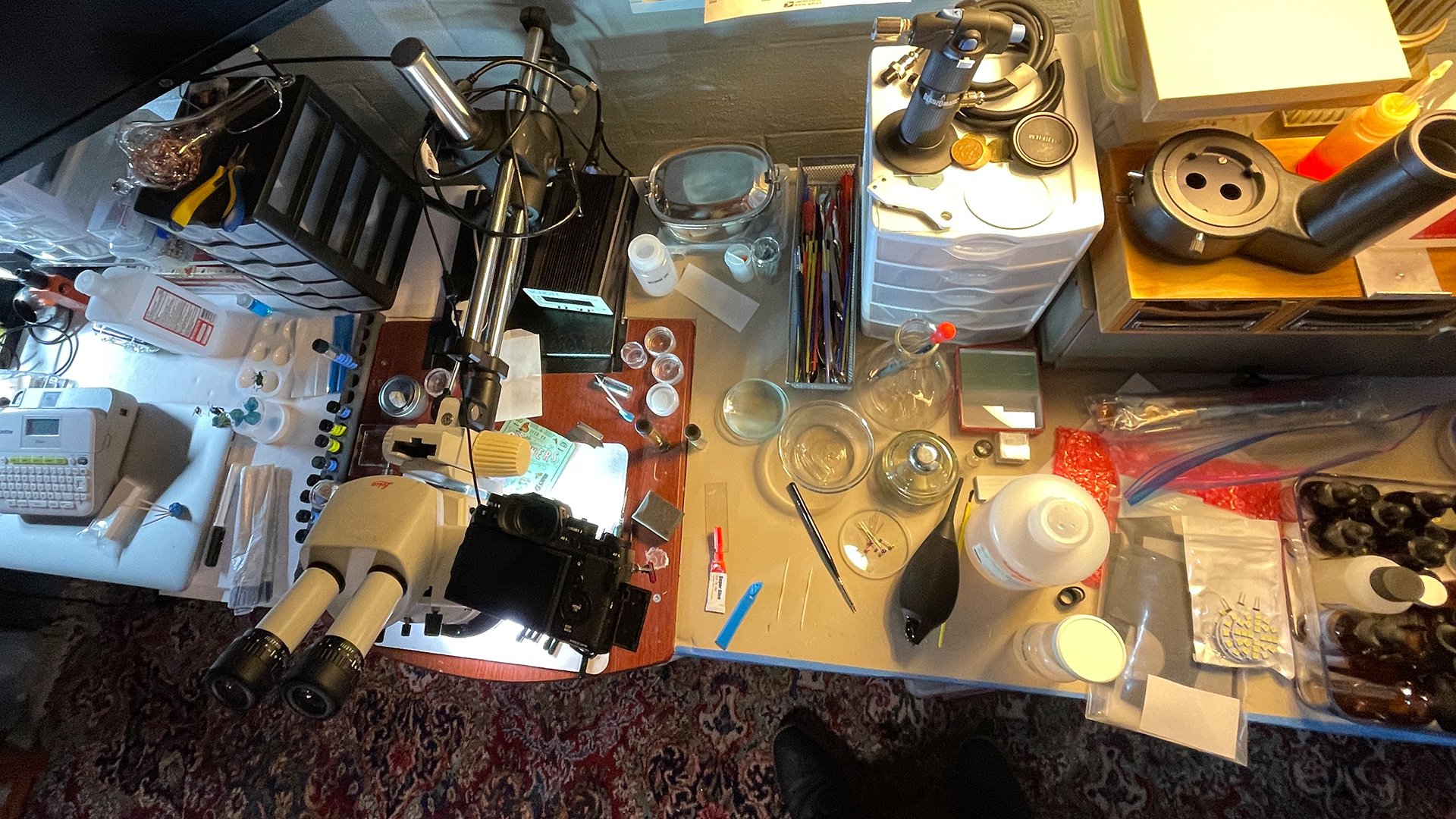
My mess
But that is not my style. I am not unlike readers of the National Enquirer, in that I wanted to know. I wanted to know why I had let my new workspace deteriorate into such a mess and I wanted to know if my new environment was hurting my work in some way. Or maybe it was the work that was the driving force behind my newfound messiness. I think that I have arrived at one or two reasonable conclusions, as well as a promising fix for the whole mess.
But why am I telling you about it? Well, I suspect I’m not alone. Many photographers—especially those juggling teaching, content creation, or life transitions—find themselves working in spaces that don’t match their values or habits. If you’re a tidy person struggling in an unfamiliar mess, it’s likely not a character flaw. It’s probably a signal that your environment needs to catch up with your intentions. But I am getting ahead of myself…
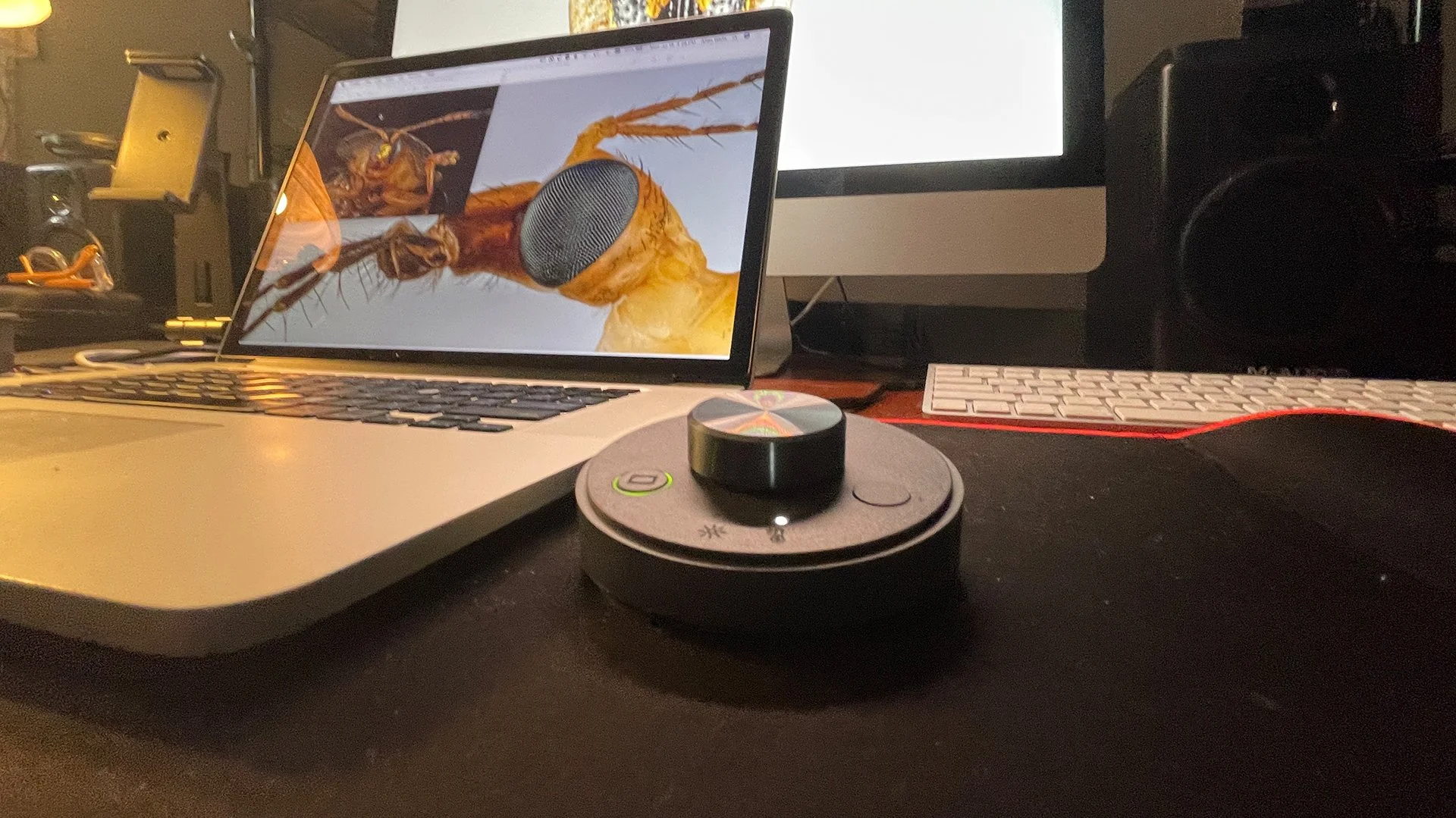
My desk as it used to be
I have always been someone who values order. Not perfection, not sterility—but clarity. When my workspace is tidy, my thinking feels more fluid, my decisions come more easily, and my photography benefits. So it has been a mildly unsettling experience to find myself working in a space that is… well… none of those things.
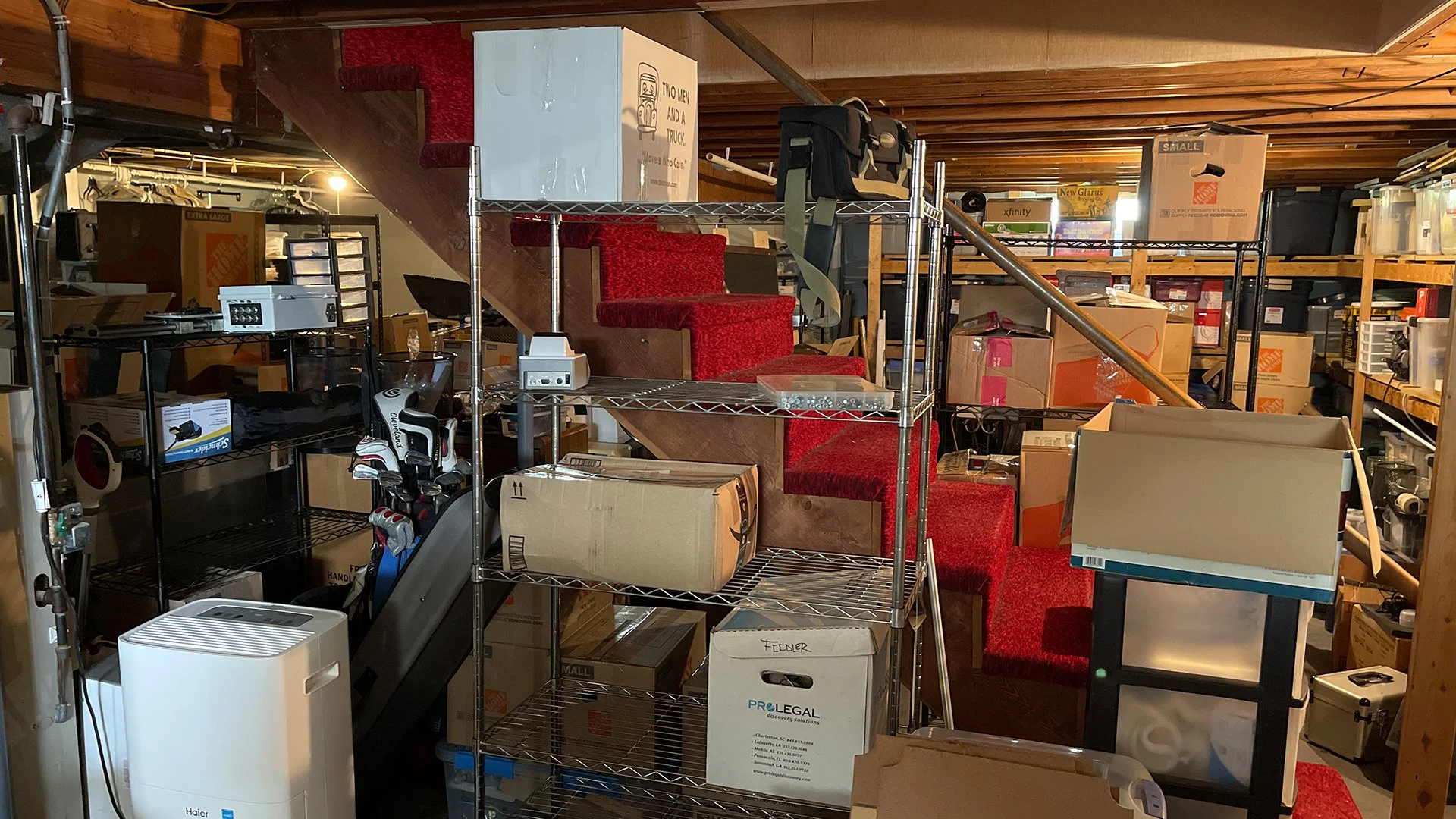
the origins of my messy period
After moving halfway across the country, all of my photographic gear—accumulated over decades—was compressed into an unfamiliar, rather dark, underground lair that also, by the way, serves as a laundry room and a general storage area. From the start the space felt, in some way, compromised, and far from the well lit, dedicated studio environment I was accustomed to. Add limited time and ongoing work demands, and organization quickly slipped from “temporarily deferred” to “quietly overwhelming.”
This wasn’t so much a moral failure as an unexpected systems problem.
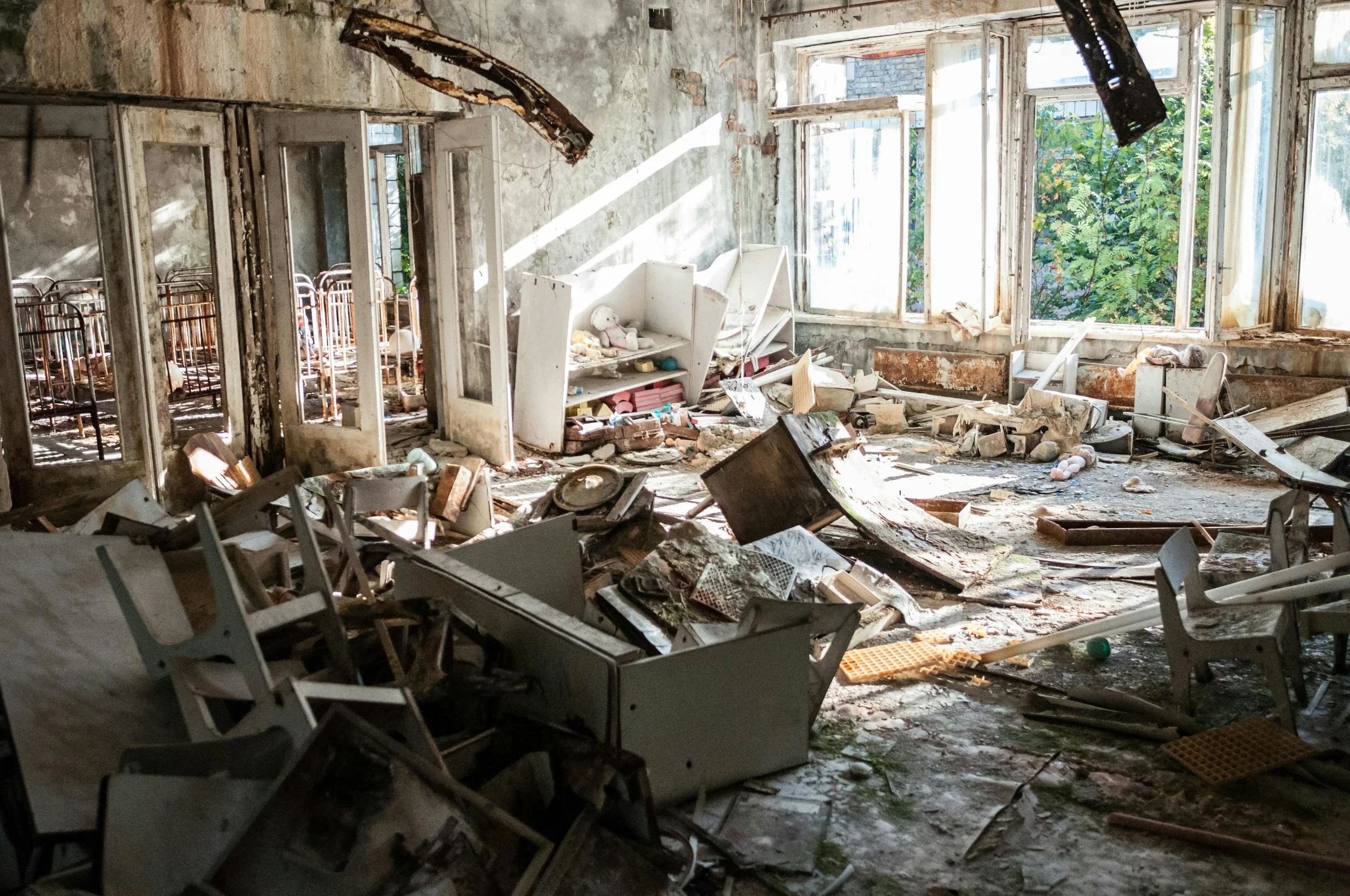
what my studio feels like
For someone who is naturally tidy, working in a self-imposed mess creates a constant low-grade tension. You know how things should be arranged, but you lack the immediate bandwidth to make it so. The result isn’t chaos—it’s cognitive drag. Every task costs a little more effort. Every setup takes a little longer. The space stops feeling like an ally and starts feeling like a negotiation.
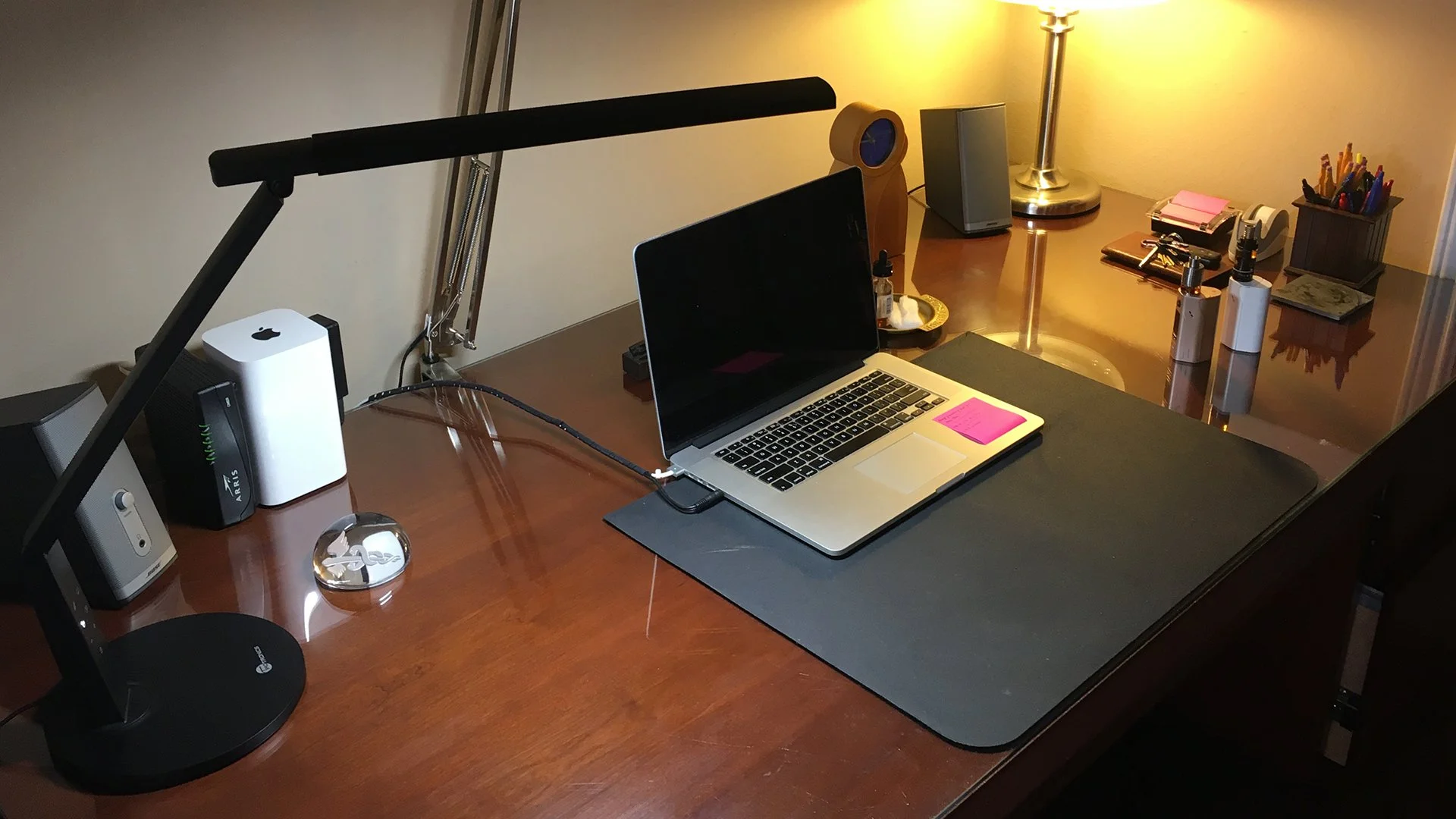
I used to call this a messy desk!
What surprised me was how quickly this affected my sense of control. Not my productivity—I was still working—but my ease. That distinction matters. Giving it a lot of thought, I was able to identify how a new untidiness might affect someone who is used to strict order, and I came up with these three outcomes:
• The untidiness feels unwelcome and invasive
• The studio no longer feels safe or controllable
• Being in the studio was causing a low-grade but constant irritation
how did that picture make it in here?!
The next thing that I wanted to figure out was the cause. Specifically, under what circumstances would a normally tidy person be moved to bring this kind of disorder into his life? I came up with a long list of possible situations but there were four that stood out as more significant than the rest:
• External time pressure
• Physical limitations (fatigue, injury, reduced stamina)
• Cognitive overload from too many simultaneous projects/promises/responsibilities
• Long projects without natural reset points
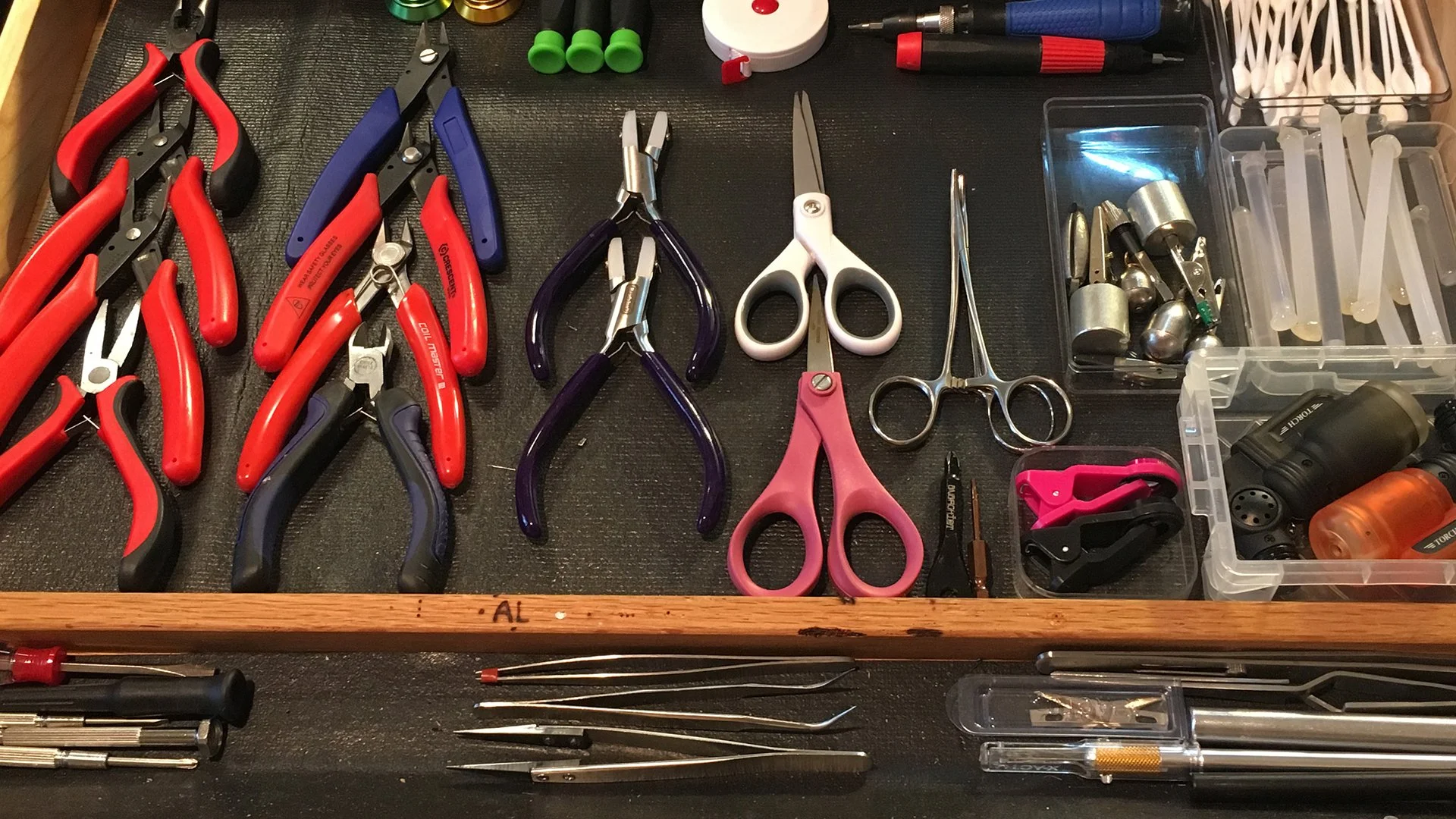
a big improvement
It was here that everything finally clicked and was able to see with clarity exactly what had happened (and was still happening). It came down to one dynamic. I still knew exactly how things should be done—but I no longer had the surplus energy needed to maintain order while ALSO producing quality content on a regular schedule.

Apropos of nothing
This creates a painful negative feedback loop, a kind of cognitive dissonance that can be described with three statements of fact:
• Order requires energy
• Disorder drains energy
• Productivity becomes increasingly costly

a bee - because I like it
So while I was asking myself, “What is wrong with me? This stuff used to be easy!” and “Why can’t I keep up - this is not me”, I was completely missing the point. I was looking for an explanation in my character - trying to find something that had broken inside of me - when I should have been looking at whether or not I had the capacity to manage everything I was piling of my plate. Could this mess be a result of too many active projects, a schedule full of self-imposed deadlines, excessively long feedback loops, and the pressure of sole responsibility for the success of the channel.
tidiness
This stressful mess was not a symptom of some new character defect - it was a systems problem - a problem of unreasonable expectations and an overwhelmed capacity. One could think of this mess as a shadow cast by my productivity.

castle in the scottish highlands
Yesterday, I decided to test my hypothesis by starting a reorganization that could take weeks to finish. I started with something modest: my desk. It had slowly become a disaster zone—the kind that accumulates when I’m too busy doing meaningful (to me!) work to notice what’s piling up around it. I was looking for something I needed for a Livestream and started digging through one of my five desk drawers. I couldn’t find what I was looking for but I was amazed at how much junk had accumulated in just this one drawer. An hour later I had emptied all five of the drawers onto the floor around me - I could not believe what I was seeing. The junk came up to my knees and it crossed my mind that this desk might well be a an early prototype of Dr. Who’s Tardis. I vacuumed out the drawers, threw away all the junk that I didn’t need and got everything back where it belonged. The relief was immediate and surprisingly intense. Cleaning out the desk didn’t solve the larger problem, but it did something even more important: it restored my sense of agency.
That single, bounded act reminded me that order doesn’t require heroics. It requires only a little commitment and a dash of momentum.

I should have made this point earlier, but I am the one responsible for the disorder in my workspace. I let my studio become like a teenager’s bedroom (minus the posters) and I am the one that let it stay that way for almost a year. But taking responsibility for my behavior doesn’t require punishment. My circumstances changed, constraints tightened, and I adapted by prioritizing output over environment. That choice was probably wrong, but it made sense at the time. Now, although my circumstances have not changed significantly, it’s time for a different choice—and this is the choice that I have made.
I am going to clean this place up. Not in a weekend purge or a grand reorganization fantasy - plans have a way of evaporating when the expectations are set too high. What I am doing instead is a paced reset, done in small, psychologically manageable steps that fit into my crazy schedule, without adding angst. Each step has been designed to result in a space that is not just tidy, but motivating—a space that gently encourages continued order rather than demanding constant vigilance.

yikes!
I am going to clean this place up. Not in a weekend purge or a grand reorganization fantasy - plans have a way of evaporating when the expectations are set too high. What I am doing instead is a paced reset, done in small, psychologically manageable steps that fit into my crazy schedule, without adding angst. Each step has been designed to result in a space that is not just tidy, but motivating—a space that gently encourages continued order rather than demanding constant vigilance.
The goal isn’t to return to my old studio. That wouldn’t work. It’s to design a new one that respects my current realities: less space, less light, less time—but still capable of supporting careful, thoughtful work.

And that is what I have been doing with my brain for the last day or so. My desk is clean and organized and I feel good about it. It was a bigger task than expected, but it is also a bigger relief than anticipated. If you are stuck in a self-defeating descent into messiness, you might try giving yourself a break, recalibrating your expectations to reflect today’s reality, and getting started with a manageable step in the right direction. However, if you are perfectly comfortable in the horrid mess you have created and would rather just talk about macro photography, you have found just the place!

On Tuesday evening I talked all about the stuff a studio macro photographer should be aware of before venturing out into the great outdoors to try her hand at field macro. It was a pretty thorough treatment of the topic, if I say so myself, and if this a subject that interests you , please check out the recording of the livestream.

Today, I will be looking at the same set of issues, only this time from the perspective of the field photographer coming into the studio for the first time. There is a lot to think about and it wouldn’t hurt to know what you are getting into by flirting with the magical world of high-magnification insect photography. The link to today’s stream is here - https://youtube.com/live/JQjaAG57u3A?feature=share

Next week I will wrap up this six-part series on insect photography by discussing the equipment and techniques that are unique to field and studio macro respectively - same general structure but all new information that will be valuable to newcomers and old-timers alike. But I am getting ahead of myself again!

Before any of that happens we have an episode of the award-winning (not really), internationally acclaimed (also not really) 3D modeling and 3D printing live discussion forum, Tangent, hosted by my good friend Larry Strunk and myself! It starts at 10AM and runs until about 11:30AM and you are invited to join us. It is free and it is fun. You will probably also learn something, or maybe a lot of somethings. Either way, it is worth the price of admission. Here is your invitation to the Zoom meeting -
Allan Walls is inviting you to a scheduled Zoom meeting.
Topic: Allan Walls’ Tangent - with Larry Strunk
Time: Feb 21, 2026 10:00 AM Central Time (US and Canada)
Join Zoom Meeting
https://us02web.zoom.us/j/6916802815?pwd=TS9tZi9ZL1NXeVUvOUF4eTg5YjdlZz09&omn=88604821520
Meeting ID: 691 680 2815
Passcode: 678122
Join instructions
https://us02web.zoom.us/meetings/88604821520/invitations?signature=MHb5_05ji7rIAtfUV8zIEpbfv0peHdFIhuQ5RV3DoK4

I was planning to give an update on the gear exchange program and the AI Assistant Initiative (both are progressing nicely) but it is 2AM on Thursday morning and I am exhausted, so I will wrap things up here. I will be posting the latest AfterStack video and the most recent Crystal Art recording on YouTube today - after I get some sleep! Hope to see you this afternoon for Macro Talk Too!

Allan